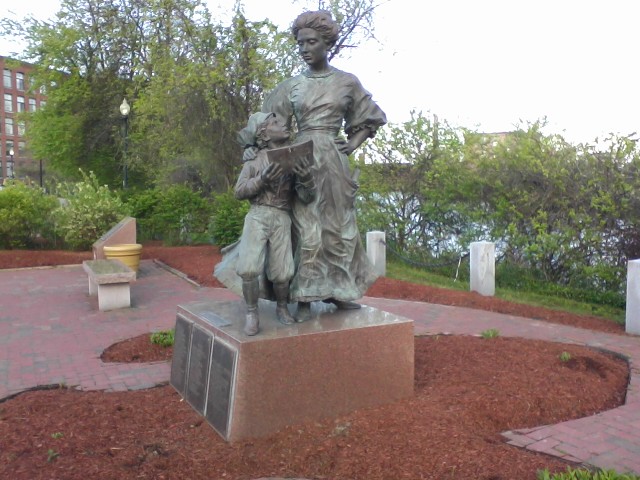
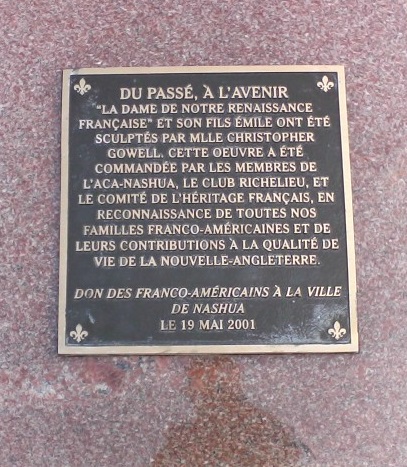
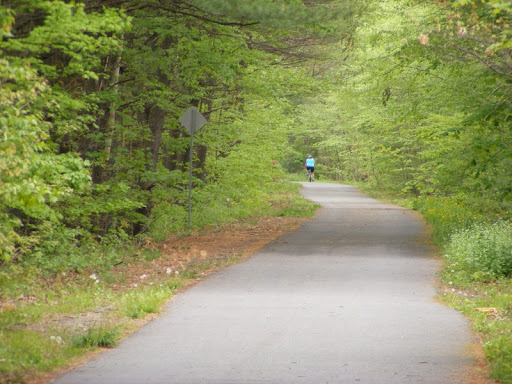
Look back over this blog’s decade of posts and one place gets mentioned in all seasons: the Nashua River Rail Trail. It extends twelve miles between Nashua, New Hampshire and Ayer, Massachusetts.
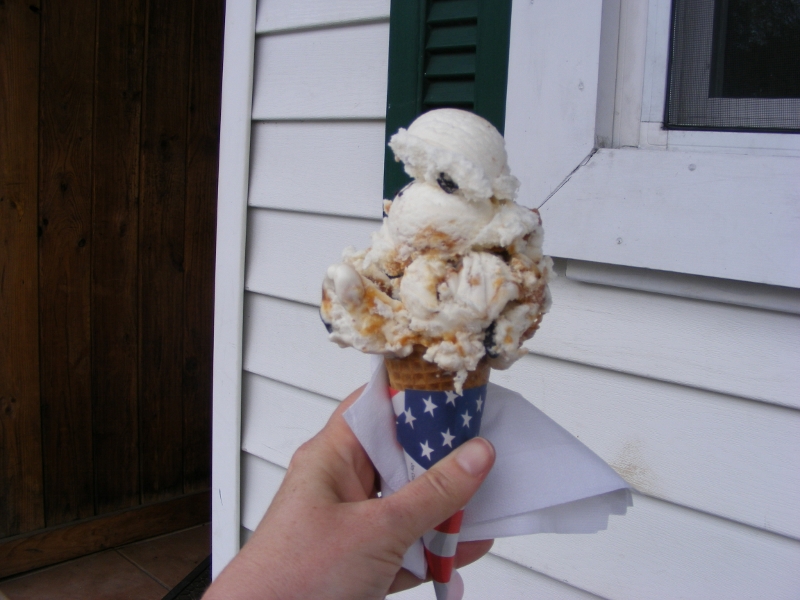
I love the seasonal changes on the trail. I like the sound of the skydiving plane overhead and the sight of the colorful chutes as the skydivers make their jumps. I like seeing what’s being planted at the farm in Dunstable. I am enchanted anew each time I see the soda machine that a trail-abutting family has set up. I like the ice cream stand in East Pepperell.
There are no bad seasons here.
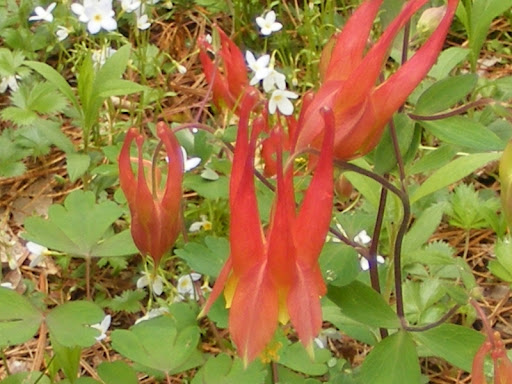
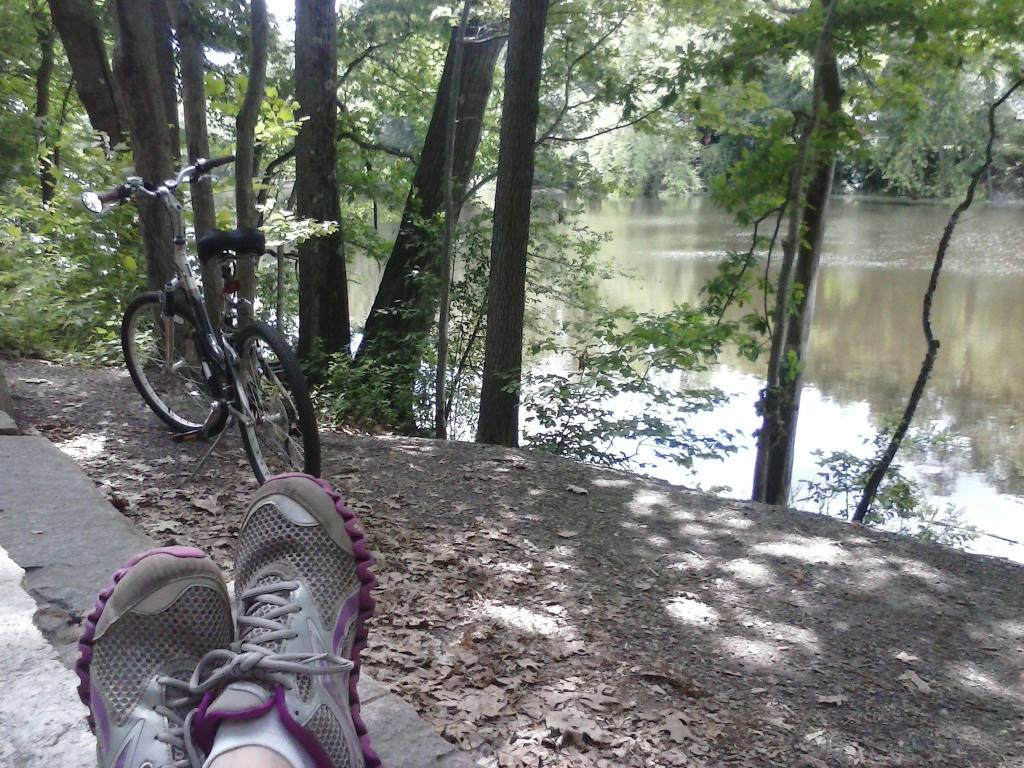
Pepperell’s Rail Trail Ice Cream Shop keeps me coming back.Columbines bloom in early summer along the trail.The Nashua River Rail Trail, mid-springAlong the Nashua River near the Pepperell/Groton line.
Here’s another submission from my bad-picture-good-hike file:
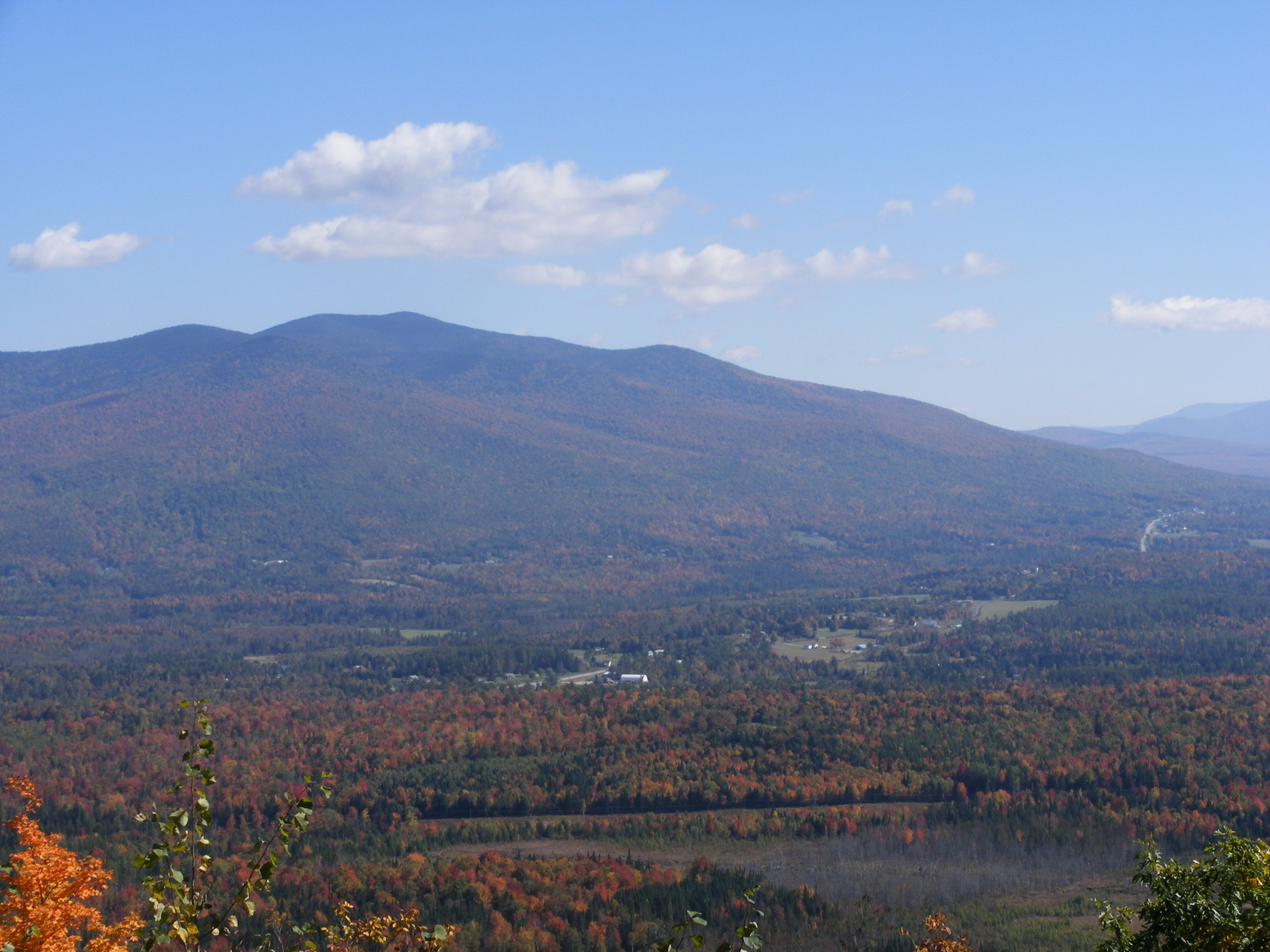
Eastward view from the auto road at Weeks State Park, Lancaster NH. Photos by Ellen Kolb.
One day a couple of years ago, I was trying to set up my camera on a wobbly support and then take a time-delay photo of myself at an overlook. Somehow, the shutter went off before the camera was properly oriented. You know what? I like this picture just the way it came out.
Longtime readers who tilt their heads slightly to one side will recognize this as the vista to the east from the Weeks State Park auto road up Mount Prospect in Lancaster, New Hampshire. I have never had a bad day there, not even the day when BB-size hail pelted me for a few minutes on my way down from the summit.
The mountain that’s shown askew is Waumbek. The rest of the vista is captured in many other photos I’ve taken through the years: the Presidential and Pliny ranges, Cherry Mountain, the Pondicherry area. (Search “Weeks State Park” on this site.)
Nearly every visit I’ve made to Weeks has been when the auto road has been closed. Great! That makes walking easier. There are trails up Prospect Mountain, but I like that auto road, and I especially like the overlooks. I’m not the only one. There are area residents who use the auto road for daily walks, weather permitting. If I didn’t live two hours away, I might join them.
Oh, and this is how an intentional shot came out that day. This is Mts. Waumbek and Starr King, with a little bit of the town of Jefferson. Not even a crooked photo could’ve spoiled that day.
Autumn in northern New Hampshire: Pliny Range, town of Jefferson, U.S. 2 in the distance at right.
I joined 17 people and one tiny-but-mighty dog for a leisurely three-mile amble through a portion of the Forest Society’s Heald Tract in Wilton, New Hampshire.
Castor Pond, where we enjoyed lunch on our hike. It’s home to heron and other water birds, as well as beaver and otter.
Our guide was David, a volunteer for the Harris Center for Conservation Education. Two of my fellow hikers owned property near the tract and knew a lot about the history of the area. We had good company and good conversation for the three hours we spent together.
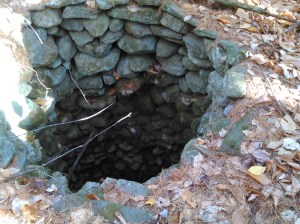
We walked through an area with old wells and foundations, and heard tales of the people who had built them and settled the area. We saw the most imposing beaver dam I’ve ever laid eyes on. I heard kingfisher as we sat pondside enjoying our lunch. No one was in a hurry, the company was congenial, and the weather was fine. I left determined to keep an eye on the Forest Society and Harris Center calendars in the future for other walks like this one.
This barn foundation dating back to the nineteenth century is about six feet high. The rest of the structure was lost to fire long ago.
For more about the Heald Tract including a map of the trails, go to forestsociety.org. Learn more about the Harris Center at harriscenter.org.
This little terrier is an unlikely-looking hiker, but she proved to be an intrepid and friendly companion.The opening to this old well is about five and a half feet across – easily the largest I’ve seen.
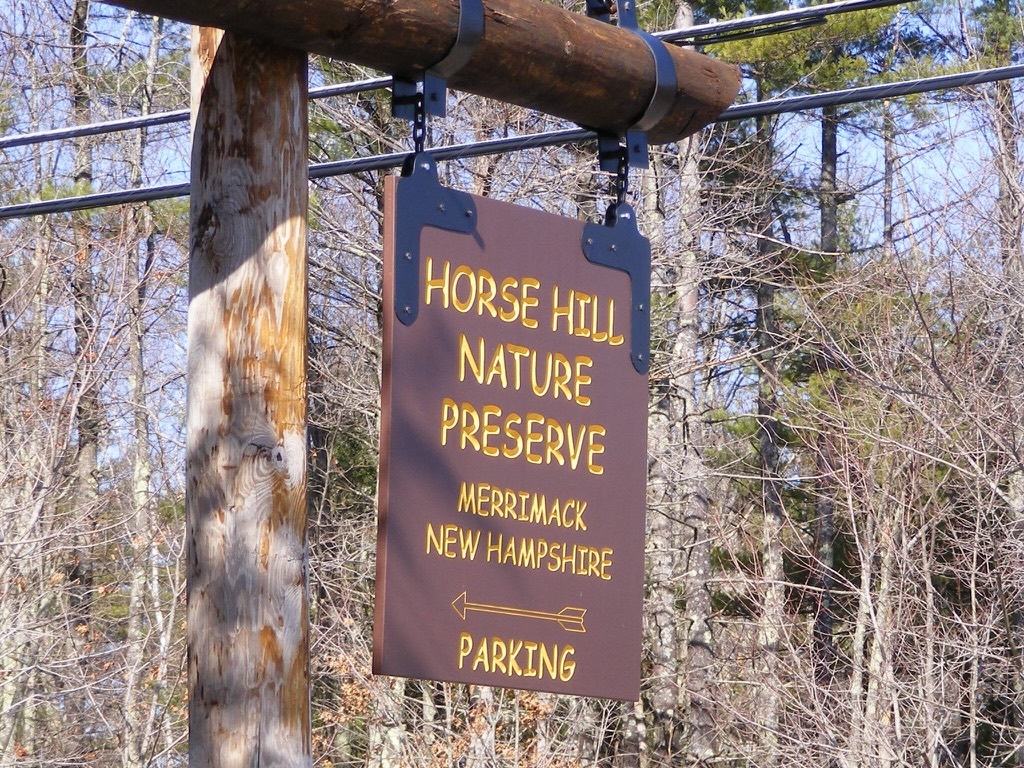
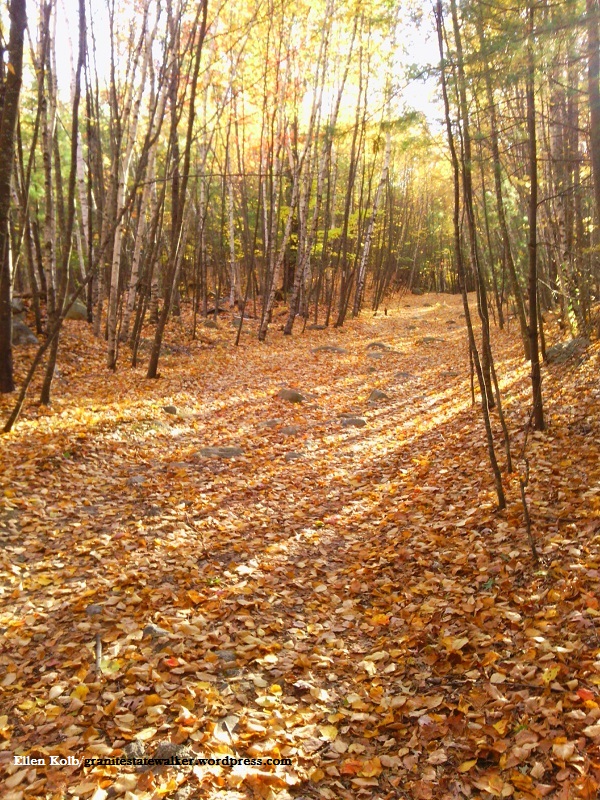
Among the places to which I’ve returned repeatedly since beginning this blog is Horse Hill Nature Preserve, one of my favorite southern New Hampshire destinations. Here are a few Horse Hill images.
When I moved to this area thirty years ago, what is now the preserve was just a big undeveloped area with a sandpit in the middle. There was once talk of building a housing development in there. The development never materialized, and in 2002, the town purchased the property for conservation. As a community, we made a wise decision.
The area needed a lot of cleanup before it was ready for prime time, and we resorted to some creative maneuvers to get the job done. I remember going there with my son’s Scout troop on a hike. In the sandpit area was debris from the area’s days as an informal target range. Each Scout gleefully stuffed his pockets full of shell casings and carried them out. I can only imagine how many forgotten little brass pieces found their way into washing machines that weekend.
My favorite season at Horse Hill. Photos by Ellen Kolb.
Now, Horse Hill is a year-round spot for walkers, runners, and off-road bicyclists. Horseback riding is allowed, too, for equestrians who don’t mind taking their chances sharing a trail with bikes. As for being a nature preserve, Horse Hill’s wetlands and trees provide habitat for a variety of wildlife.
Horse Hill is popular enough that the town just tripled the size of the parking area, yet it never seems crowded once I’m more than five minutes from my car. Plenty of trails branch off from the main loop, so hikers aren’t concentrated in one area.
If you go, pick up a map first from the kiosk on Amherst Road, and then have fun.
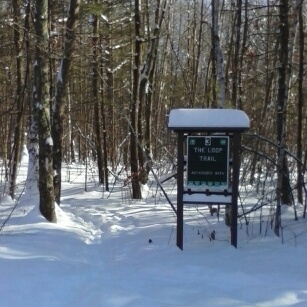
Trails in winter are good for snowshoeing, cross-country skiing, and fat tire biking.
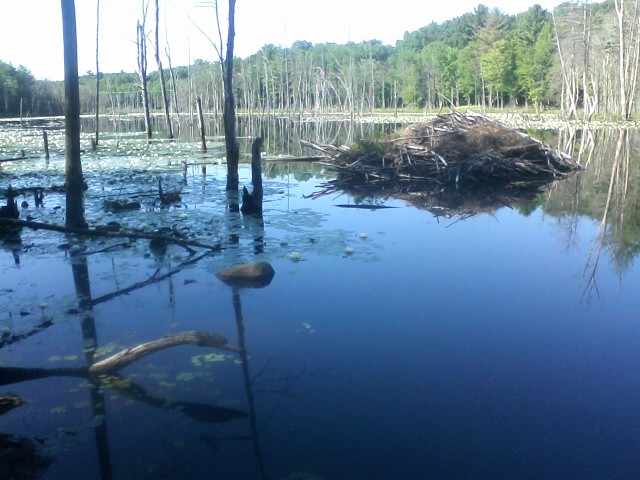
Lastowka Pond at Horse Hill Nature Preserve hosts a heron rookery and beaver lodge.
I walk for fun, to explore, to more-or-less exercise. I also walk to keep my head on straight. I wouldn’t have gotten through today without a couple of miles outside.
I’m a political critter, you see. I’ve been a campaign staffer, an activist, a blogger from the New Hampshire State House, to name a few pastimes. Yesterday was election day after the nastiest campaign year I’ve ever experienced. This has been a backed-up-sewer of a season.
Nothing will flush it out except time on the trails.
I had time today for a couple of local miles. Manchester’s Piscataquog rail trail came through for me. There were enough leaves left on the trees to serve as a canopy. The overcast sky suited me; bright sunlight would have left me with a slashing headache.
Forty good minutes: enough time to escape agitation. Time to block out the noise, turn away from the news feeds, take lots of deep breaths, recall what’s important.
A man biked past me. I recognized him as the unofficial adopter of the trail, picking up bags of trash, neatly hanging fresh plastic bags every hundred yards or so. Seeing him was oddly consoling and reassuring. He has a simple, selfless volunteer’s dedication to an unsung job that consists of keeping a public area pretty.
Beat that, candidates.
Decompression is going to take awhile. Today’s walk was a good start.
As the Granite State Walker blog turns 10 this month, I’m looking back at some of my favorite southern New Hampshire destinations. Today’s gallery: Mine Falls Park in Nashua. This urban park is accessible from the Everett Turnpike (exit 5W, or 5E to Simon Street), Stellos Stadium, Lincoln Park, the Millyard downtown, or 7th Street off Ledge Street. If you live near Nashua and you haven’t explored this park yet, do yourself a favor and get out there!
Two boat launches serve the park, including this one outside Conway Arena. All photos by Ellen Kolb.
The dam at Mine Falls.
This path edges the millpond, home to heron and beaver.
A short history of the park.
Muskrats love the Mine Falls canal. The canal, nearby Nashua River, and millyard cove are great areas for observing birds and wildlife.
In the winter, I bring my snowshoes.
A memorial to a fallen Nashua-area Marine SSGT Allen Soifert graces the walkway leading to the Mine Falls playing fields.