Pondicherry Wildlife Refuge, New Hampshire: tell a friend about it

A friend and I have been trying for several weekends to arrange a hike, with last-minute work commitments sabotaging every trip so far. Still, we keep planning. When I suggested Pondicherry Wildlife Refuge, she said “where’s that?” I was going to refer her to a blog post here, when I discovered to my embarrassment that I hadn’t yet written about this lovely place, despite my fondness for it. Oops. Making up for lost time here.

The refuge straddles the towns of Jefferson and Whitefield. To get there from southern New Hampshire, I take I-93 through Franconia Notch and then U.S. 3 through Twin Mountain into Whitefield. There’s a airport sign in Whitefield pointing me to a right turn off route 3. A drive around the south side of the one-runway airport brings me to a little biomass plant, across from which is a well-marked parking area for Pondicherry.

Mount Martha, with Presidential range at left. All photos by Ellen Kolb.
Cherry Pond, with Presidential range at left and Mount Martha at right. All photos by Ellen Kolb.
trailhead, Airport Road
Pondicherry trailhead, on Airport Road in Whitefield.

From the parking area, one could be forgiven for thinking “is that all there is?” The Presidential Rail Trail extends north from there, looking like a long dirt boulevard. (In fact, it’s a busy snowmobile thoroughfare in the winter.) Cherry Pond is a mile and a half away via the trail. During my April visits, little spring flowers are usually peeking up on the sunny side of the trail when there’s still ice along the shaded side. I seldom have company here, and there is little noise except for the occasional small plane landing at the airport.

The walk into the refuge is tree-lined, making the sudden view of the Presidentials all the more startling when I arrive at Cherry Pond. I never get tired of that view.

Nearby are Little Cherry Pond and the adjacent wetlands. The Cohos Trail passes through, piggybacking on the Presidential Rail Trail for some distance. There’s an observation platform, affording excellent views for the birdwatcher who remembered to bring her binoculars. Critters of all sizes, from beaver to moose, find Pondicherry a congenial place.

An active (but not busy) rail line runs through the property as well. I sometimes see a few freight cars parked on a nearby siding. This quiet location still bears the old rail-line name Waumbek Junction.

Pliny Range, north of Cherry Pond

The Pondicherry refuge is a cooperative venture of state, federal, and private organizations. A good guide to the Pondicherry trails can be found in the Jefferson Dome chapter of Kim Nilsen’s book 50 Hikes North of the White Mountains.

Update, 2026: Since I wrote this entry, Pondicherry Wildlife Refuge has found its way into many of my posts. I describe a recent visit in “One way to celebrate, part II,” with summertime photos.

Pawtuckaway via Deerfield Fair

Given a complimentary pass to Deerfield Fair, I decided to enjoy not only the fair but also nearby Pawtuckaway State Park.  It’s early fall, cool but not yet cold. The leaves are just beginning to turn around here. It’s less than an hour’s walk from the quiet northwestern edge of the park to the fire tower on south Pawtuckaway peak.

First fall colors at the edge of wetlands on Tower Road.

First fall colors at the edge of wetlands on Tower Road.

I hiked in from the northwest corner of the park on Reservation Road, far from the busy main entrance.

I hiked in from the northwest corner of the park on Reservation Road, far from the busy main entrance. The little blue asters were the only blooms in sight.

Pawtuckaway fire tower. Barely visible on the underside of the cab are charts describing the landmarks in each direction.

Pawtuckaway fire tower. Barely visible on the underside of the cab are charts describing the landmarks in each direction.

View from fire tower east to Pawtuckaway Lake and the Seacoast.

View from fire tower east to Pawtuckaway Lake and the Seacoast.

View to northwest; Mt. Kearsarge in distance.

View to northwest; Mt. Kearsarge is barely visible in the distance at center.


Enter your email address to subscribe to this blog and receive notifications of new posts by email.

Celebrate Ten Years of Connecticut Lakes Headwaters Conservation in NH

East Inlet, Pittsburg NH.

East Inlet, Pittsburg NH. Photo by Ellen Kolb.

Some years back, the decline of New Hampshire’s North Country paper industry left up in the air the future use of over 100,000 acres in Coos County. Conservationists got busy in an effort to protect the land for recreation and forest management. A serious team effort resulted in the Connecticut Lakes Headwaters Working Forest in 2003. Time to celebrate the first decade!

Head to Lake Francis State Park in Pittsburg (get on U.S. 3 and just keep heading north) on October 5th for the big event. The Department of Resources and Economic Development – and has there ever been a worse acronym than DRED? – is hosting lunch and a few speakers at 11:30 a.m. At 1:30, the real fun begins. Attendees can choose from six tours, each in a different part of the CLHWF, lasting until 4:30. For more information, or to RSVP, email Eric Feldbaum at eric.feldbaum@dred.state.nh.us. With your RSVP, be sure to specify your choice of tours.

Want to hear about the Cohos Trail, and walk on a short segment? Yes, I know I write about the CT a lot. You can find out why if you join Lainie Castine after lunch on the 5th.

Maybe you like fire towers instead. If so, head to Mount Magalloway. Forty-five vigorous minutes on the trail will reward you with views that will knock your socks off.

Have you ever been to Boundary Pond? Here’s your chance to see it, if you’re ready for a drive; the boundary in question is with Canada. Other afternoon options include kayaking, a timber harvest forestry tour, and a local-history lesson. I wish I could head north for the event, although I’d have a hard time choosing just one afternoon activity. I encourage you to make the trip, if you are anywhere near northern New Hampshire. Again, let me mention that address for RSVPs, so the organizers know how many people to expect: eric.feldbaum@dred.state.nh.us

Yes, I love the Connecticut Lakes. My photography doesn’t do the place justice. I hope you can take your own photos there someday.

First Connecticut Lake and Mount Magalloway, from Prospect Mountain. Photo by Lainie Castine.

First Connecticut Lake and Mount Magalloway, from Prospect Mountain. Photo by Lainie Castine.

River Road covered bridge, on the way to Lake Francis SP. Ellen Kolb photo.

River Road covered bridge, on the way to Lake Francis SP. Ellen Kolb photo.

Sunset, Cedar Stream Road. Ellen Kolb photo.

Sunset, Cedar Stream Road. Ellen Kolb photo.


Enter your email address to subscribe to this blog and receive notifications of new posts by email.

Bear Brook State Park, Allenstown NH

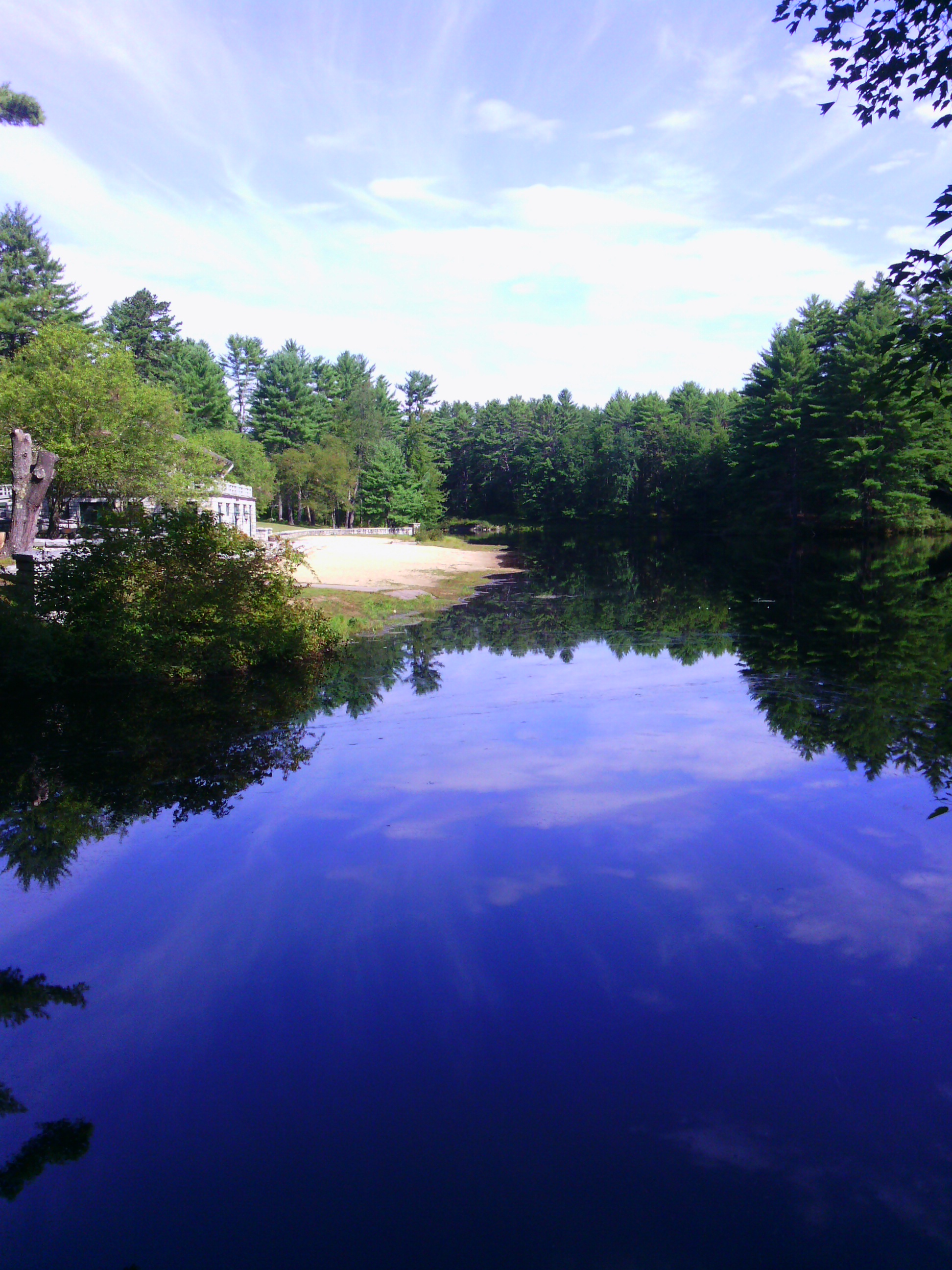
lake in a state park, deep blue water, partly cloudy sky, forested shore
Catamount Pond, Bear Brook SP (Ellen Kolb photo)

I had casual business in New Hampshire’s capital city this weekend, and found myself with a couple of unscheduled hours afterward. I decided to take US 3 south to NH Route 28 north in order to check out New Hampshire’s largest developed state park, Bear Brook in Allenstown. Yes, another spur-of-the-moment hike. They often work out well.

Bear Brook is a 10,000-acre park with many trails, which I’ll have to save for another day. I had time for only a brief visit. I came in to the park via Deerfield Road off of NH Rt. 28. I pulled over at the park kiosk, paid a small entry fee, and picked up a trail map. Catamount Hill was nearby, and so was Catamount Pond with a little beach. Those were destinations enough for today.

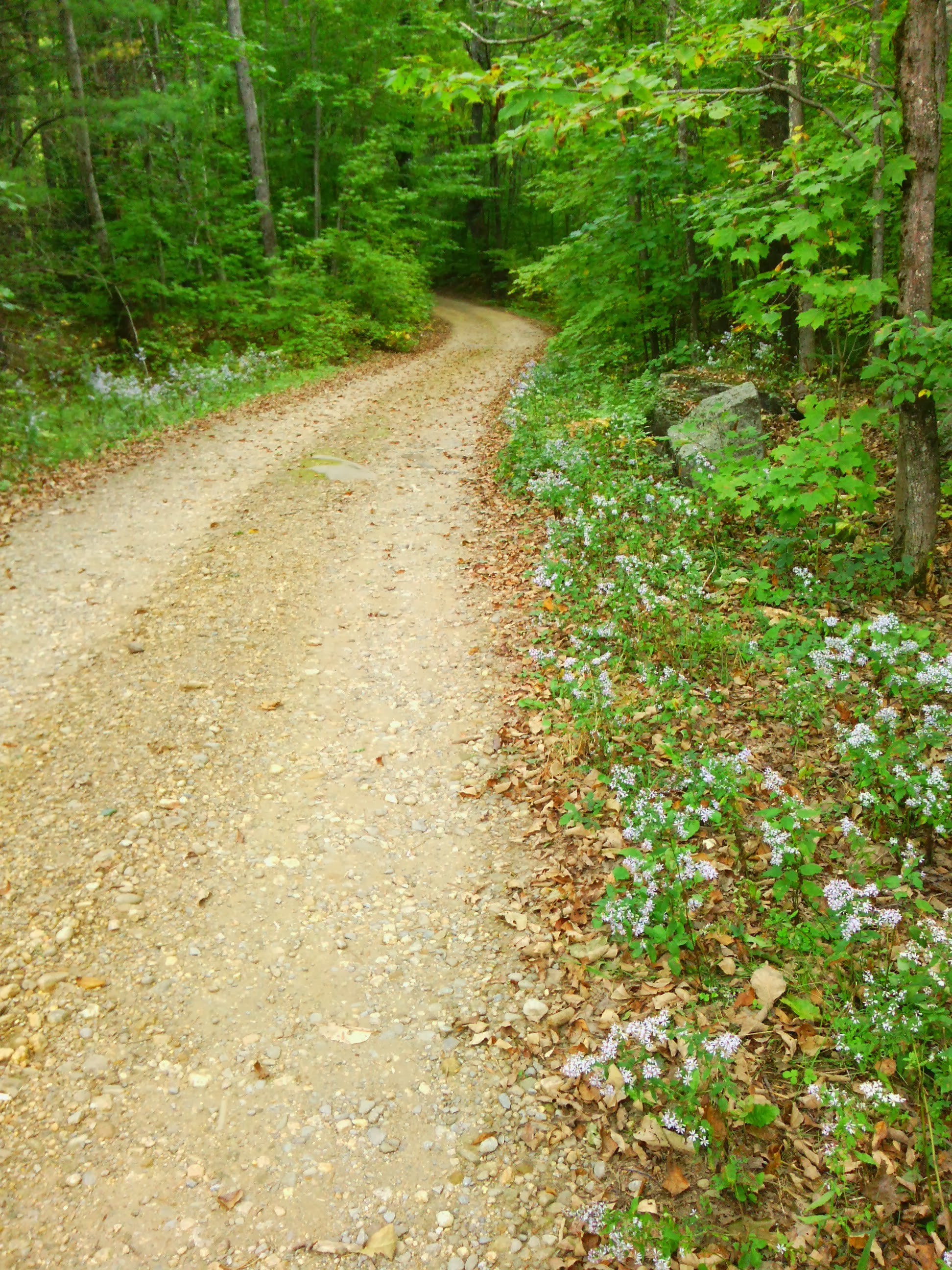
The hill is rated “difficult” on the park trail map (which is available as a PDF on the NH state park web site), but that’s a stretch. Uphill, yes, but no scrambling on the ledge. I had sneakers on, and no trekking pole, and the knee I hammered a couple of weeks ago on another hike was not stressed. The only wildlife I saw was of the six-legged variety.

One-Mile Trail, Bear Brook SP (Ellen Kolb photo)

This was a woods walk. I met three mountain bikers walking their bikes and their dogs uphill as I was heading down, and they were working a lot harder than I was. “Guess I’d better stay right,” I called. “No, we’re going down on another trail,” said one of the bikers reassuringly. They didn’t waste any time. We ran into each other again at the base of the hill, all smiles after what must have been a rip-roaring ride for them.

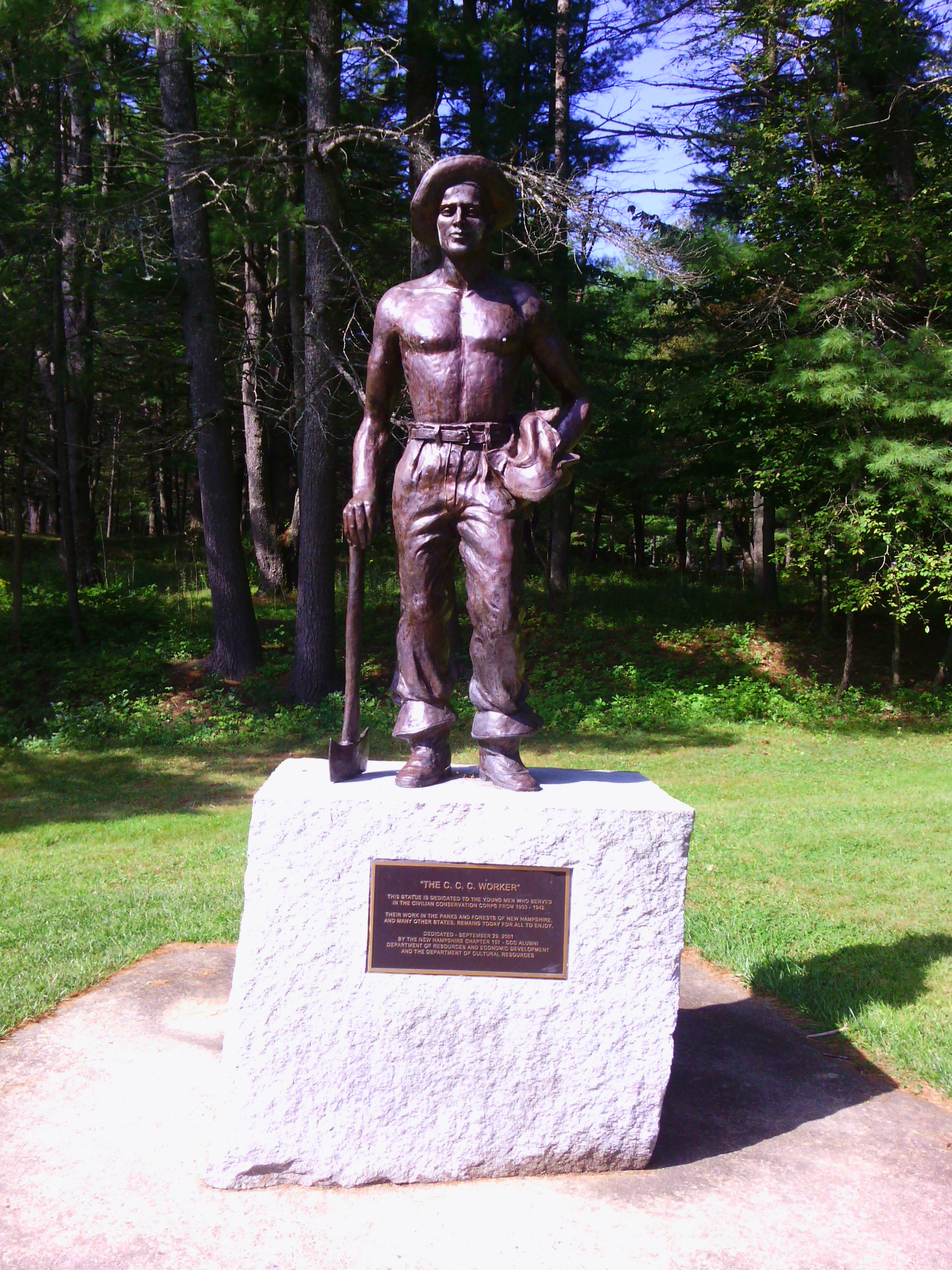
Catamount Pond and its facilities are across the road from the entrance kiosk. Deserted today, the beach looks like it could accommodate a crowd on a hot day. This looks like a great area for a family outing, with a playground and picnic pavilion nearby. On the lawn is a monument to the Civilian Conservation Corps workers who helped to develop this park.

There is much more to Bear Brook than I could see today. I didn’t even get to the snowmobile museum, campground, or archery range. The park land is open year-round, but some facilities may not be available through fall and winter. Check the park’s website.

CCC monument, Bear Brook SP (Ellen Kolb photo)

Mr. Stiles’s lesson: Share what you love about New Hampshire

purple lilac blossom

Share what you love about New Hampshire. You never know who might be listening.

In August 2013, I read in the newspaper about the passing of a New Hampshire gentleman named Walter Stiles. May God rest his soul. The published tributes indicate that he was a generous man in every respect, devoted to his family, active in his community.  I met him only once and had a single unforgettable conversation with him on the subject of lilacs. In the short time we chatted, he managed to convey his great and contagious affection for this state and its natural beauty.

I never thanked him. I’ll try to make up for that here.

We met at a political gathering, not a social one, and there was a lot of edgy debate among attendees that day. By some chance, I was seated next to Mr. Stiles, who I think was a state representative at the time. His kindness and dignity were a kind of antidote to the tension in the room. I asked him what he did when he wasn’t serving in his political office. I realize now that he could have said any number of things, for as his obituary made clear, he was a man of many parts. What he chose to tell me was about his interest in horticulture, particularly lilacs.

I had never paid much attention to lilacs before that time, to tell you the truth. They were just sort of there. Listening to Walter Stiles, I began to realize what I’d been missing. He told me about the Governor’s Lilac Commission, which was a fairly new group at that time (and has since been disbanded, alas). He told me that the lilac was the state flower, and that he hoped to see more people plant them around their homes and schools and towns. He talked about the flower’s wonderful fragrance, which I had somehow never stopped to notice.  He told me about the people working with local garden clubs to encourage cultivation.

When the day’s proceedings were over, he bid me a cordial farewell and went on his way. He must have been grinning to himself, knowing better than I did that he had dropped an idea in front of me and that I was sure to pick it up eventually.

That was many years ago. Since then, lilacs planted by my husband have grown to line one side of our yard. I wait impatiently every spring for those gorgeous blossoms. I fill vases with them and bring them into the house so the fragrance can fill the rooms. I appreciate all their colors, from white to deepest purple. I’m grateful to everyone who has gone to the trouble of planting lilac bushes, which take a few years to establish.

It’s no accident that I do more hiking as I get older. I have more to appreciate and enjoy. I’ve benefited from many people who have taken the time to share with me their love of this state’s beauty, giving me all the more reason to savor my time on trails.

If you’re a fan of being outdoors, I hope you’ll do what Mr. Stiles did: share your enthusiasm. I only met him once, and I never had the chance to thank him for expanding my horizons just a bit. I’m guessing he’d consider those lilacs in my yard thanks enough.

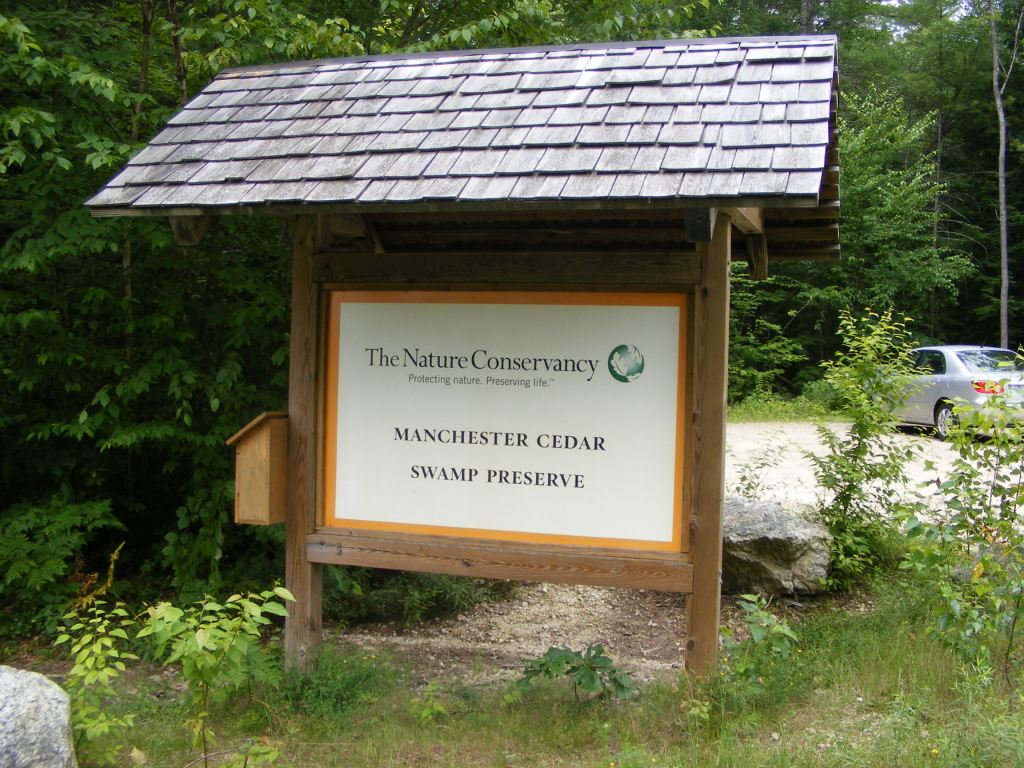
Manchester Cedar Swamp Preserve: rhododendron heaven

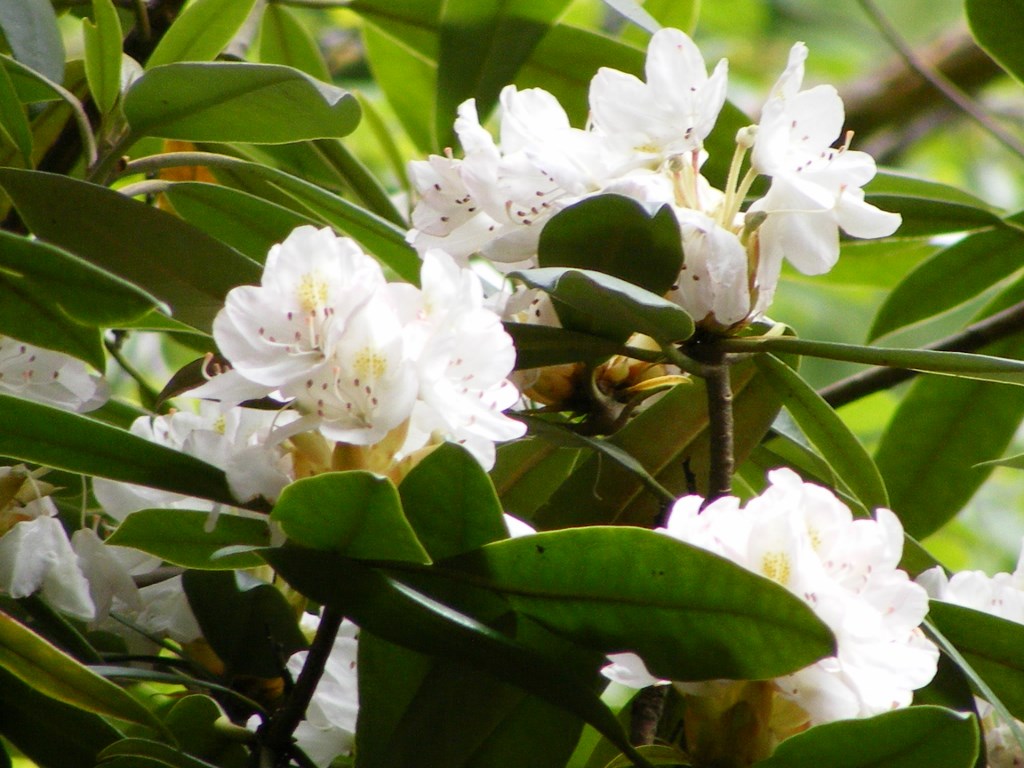
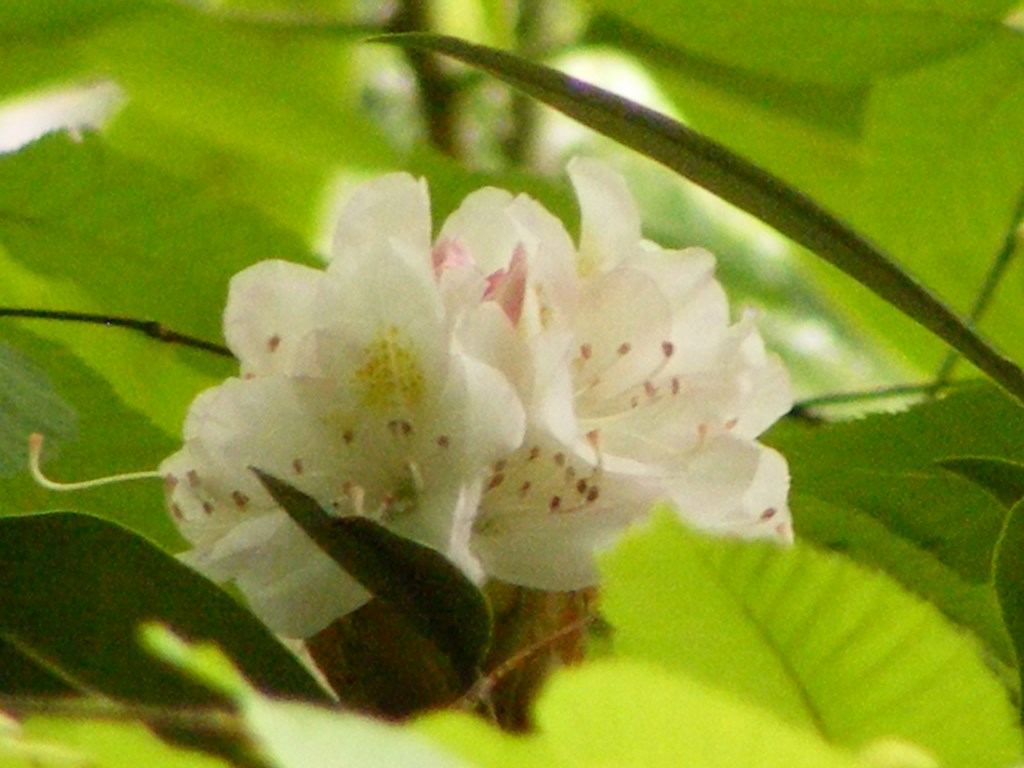
I’m much obliged to reader Steve for bringing Manchester Cedar Swamp Preserve to my attention. This Nature Conservancy property straddles the line between Hooksett and Manchester, New Hampshire, not far from Hackett Hill Road. Among its features is the giant rhododendron, which happens to be a July bloomer.

Parking is in a well-signed spot on Countryside Boulevard, about a half-mile from Hackett Hill Road. Bring your bug repellent and enjoy the walk, but please, no dogs. The trail system is 1.8 miles long.