Over the years I’ve maintained this blog, there’s one unassuming little post that keeps getting hits every single month: my walk to the Oak Hill fire tower where Concord meets Loudon. Is it the “fire tower” phrase that keeps the search engines happy, or does New Hampshire’s capital city have a lot of enthusiastic local walkers?
Either way, the Oak Hill trails deserve the attention. They’re pleasant, easy, varied, and only a few minutes away from downtown Concord. I headed there after some work at the State House recently, knowing that I could only spare a half hour or so.
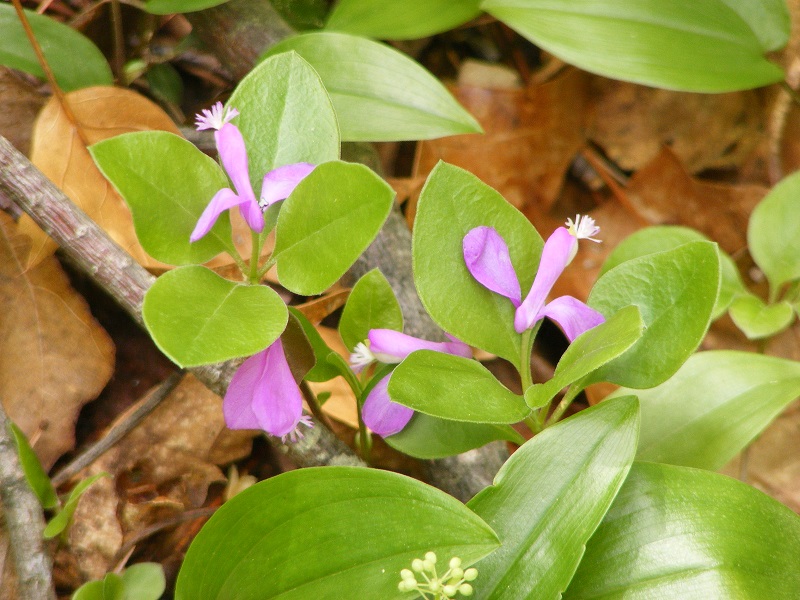
The only blossoms in sight on a spring day were on the ground cover at the edge of the trail. Shown here: fringed polygala. Photos by Ellen Kolb.Junctions are well-marked, but this little “new vista” sign helped keep me on the right path.
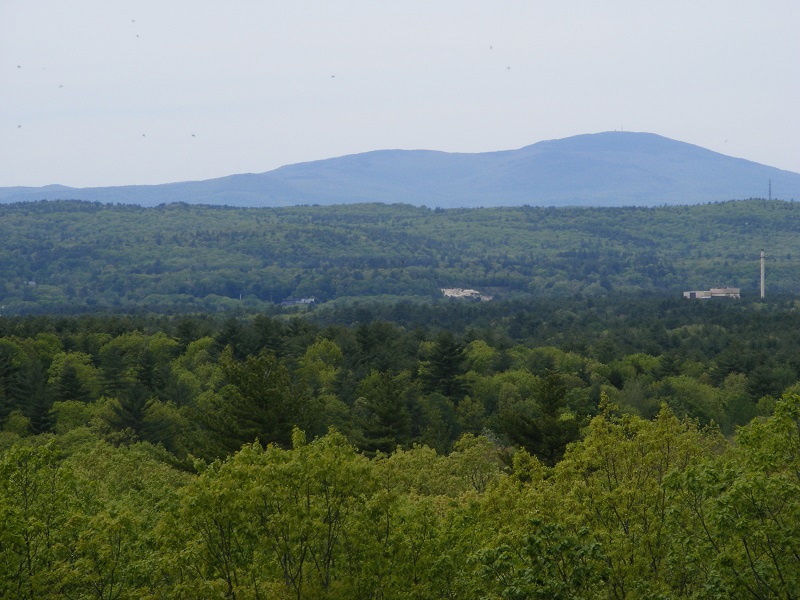
I followed the signs to “vista,” only about a 12-minute walk from the parking area, and was treated to a good view of Mt. Kearsarge. That was ample reward for my quick visit.
Mt. Kearsarge to the west. Trees conceal the Merrimack River, flowing south past the industrial building at right.
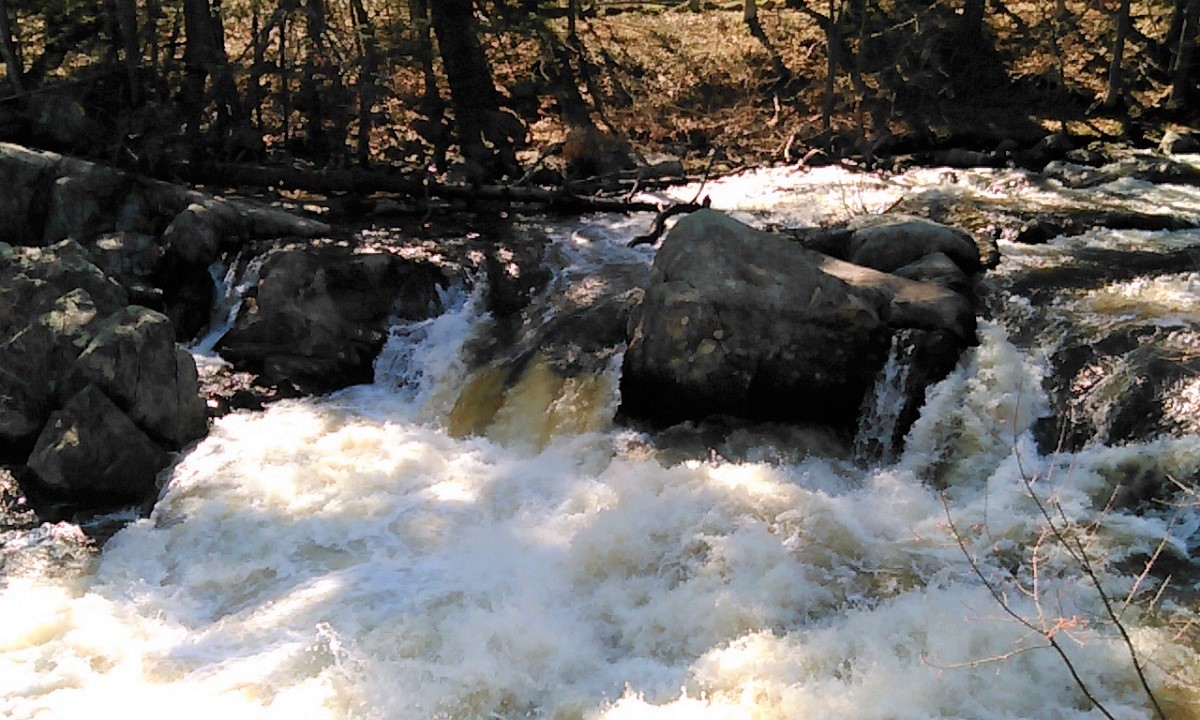
The Souhegan River runs through my New Hampshire town and through the Wildcat Conservation Area. WCA’s most striking feature is Wildcat Falls, and it’s the reason there’s a canoe take-out upstream where the river crosses Turkey Hill Road. Way too much granite and way too many fallen trees make the falls a spot that’s pretty to look at but lousy to navigate. The falls don’t come from a single height, but rather from irregularly terraced granite shelves and boulders left in the river when the last glaciers retreated.
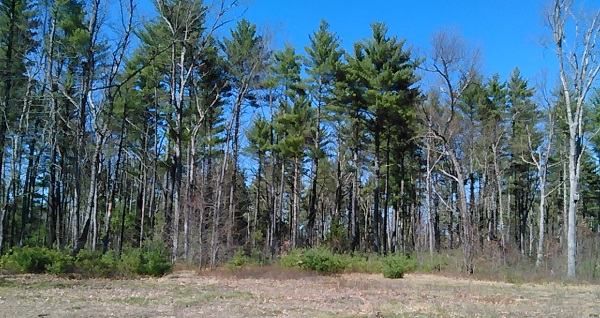
There are a couple of miles of trails winding through the conservation area and the adjoining state property. All I was interested in today was a direct path to the falls. The walk to the falls from the Currier Road parking lot goes through a sandy, pine-y area that reminds me of where I grew up in flat southern Florida, where rivers looked like canals and where waterfalls were pure fiction.
Update, 2025: Parking for WCA is now available in Watson Park on US 3 in the center of Merrimack. A trail about a half-mile long follows the Souhegan River upstream from Watson Park, eventually crossing under the Everett Turnpike and emerging in WCA. If the parking area off Currier Road is full, park at Watson, not on the residential streets near WCA.
From the parking lot for Wildcat Conservation Area in Merrimack NH, it’s a short walk through sandy woods to get to the Souhegan River and Wildcat Falls.
New Hampshire enjoyed benign weather on New Year’s Day, perfect for a First Day Hike. I headed to Bristol, home of Wellington State Park and the Elwell Trail. No snowshoes needed; the trail was well-packed. Gravity got the best of me a few times despite the YakTrax on my boots, but I fell gently thanks to the snow cover. About sixteen of us were led up the trail by a guide from the Newfound Lake Region Association.
Newfound Lake in Bristol, NH, seen from Little Sugarloaf. Ellen Kolb photos.
Our destination was Little Sugarloaf, a modest peak about a mile and a half from the Wellington parking lot. There were plenty of hikers on the hiking trails and snowmobilers on the snowmobile trails, with cooperation and good cheer all around.
The payoff view: Newfound Lake on a clear and sunny day, with ideal sights and sounds. We watched a pair of bald eagles fly around the islands below us. The snowy peaks of Franconia Notch about 40 miles away were visible. I knew there were snowmobiles all over the lower trails, but I could barely hear them from Little Sugarloaf’s summit.
A few of my more ambitious companions decided to hike on to Sugarloaf, a few hundred feet higher. I might check that out some autumn day.
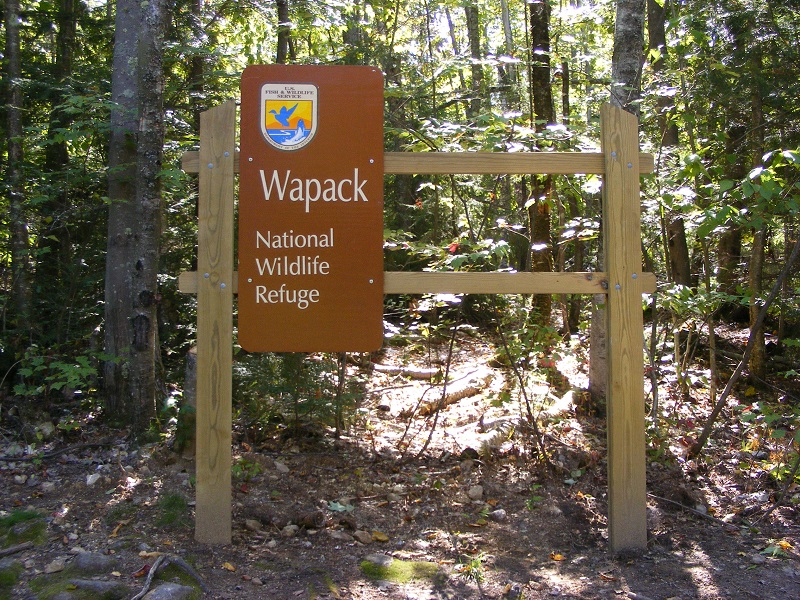
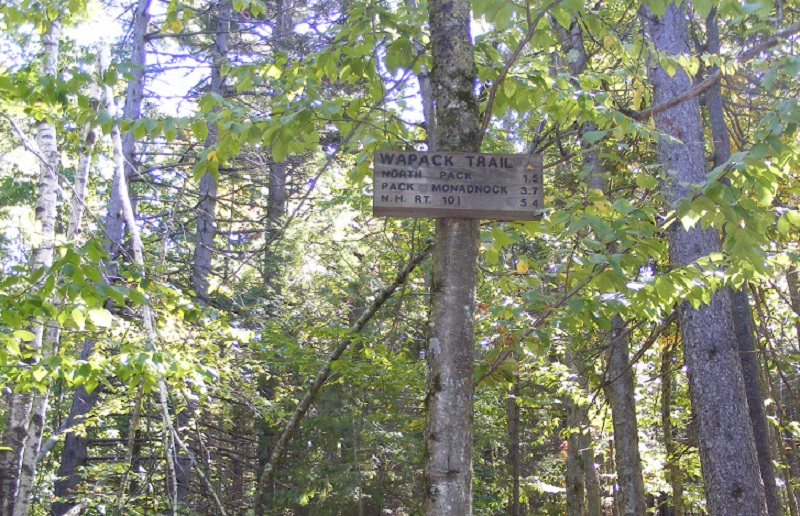
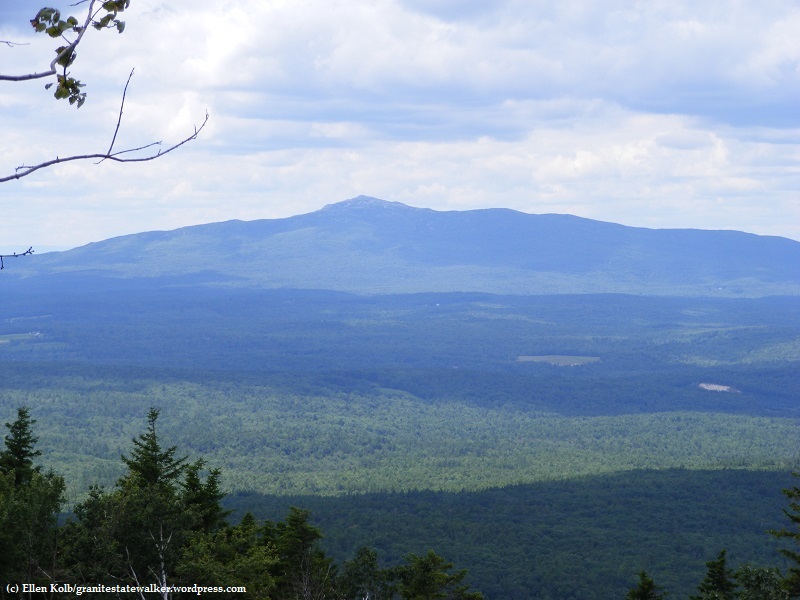
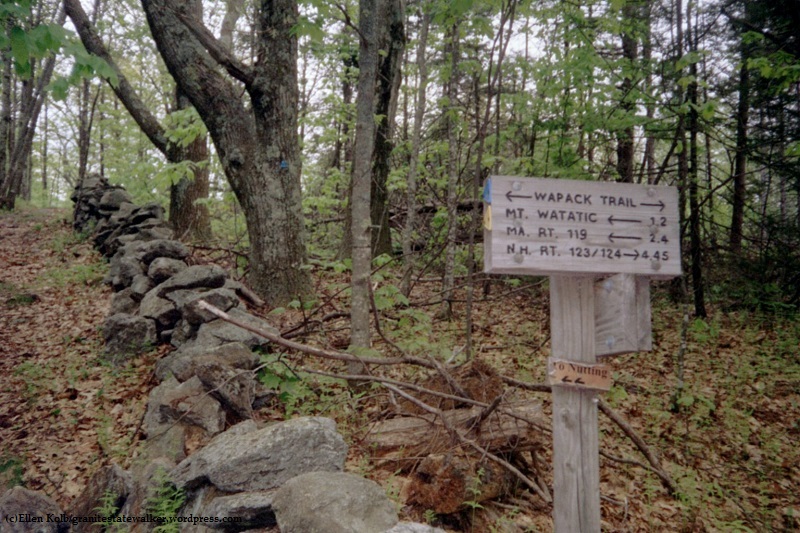
From Ashburnham, Massachusetts to Greenfield, New Hampshire, the Wapack range extends over a series of peaks that can be seen clearly from the eastern slopes of Mount Monadnock. The 21-mile Wapack Trail spans the range, with segments that make great dayhikes.
My copy of the the Wapack Trail guide is well-thumbed, and the map that comes with it has held up pretty well for me through the years. Map and guidebook, along with recent trail notes, are available at the Friends of the Wapack web site.
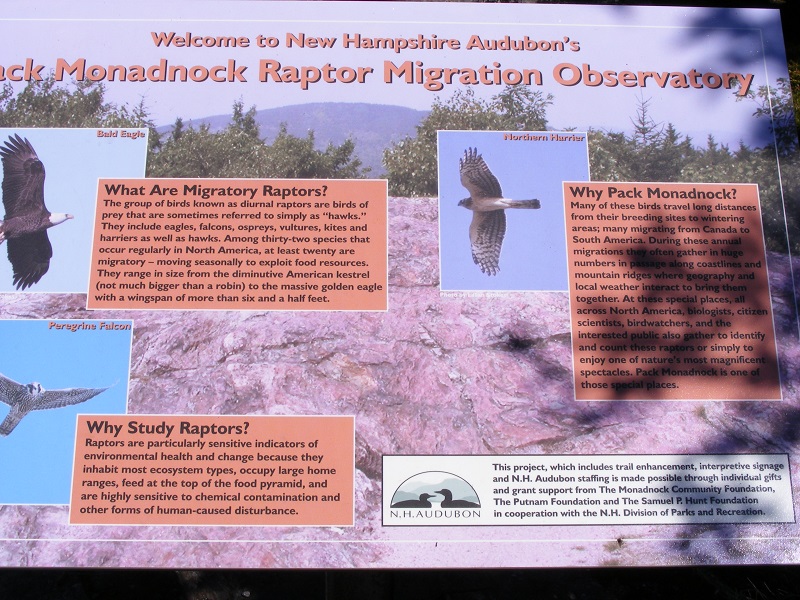
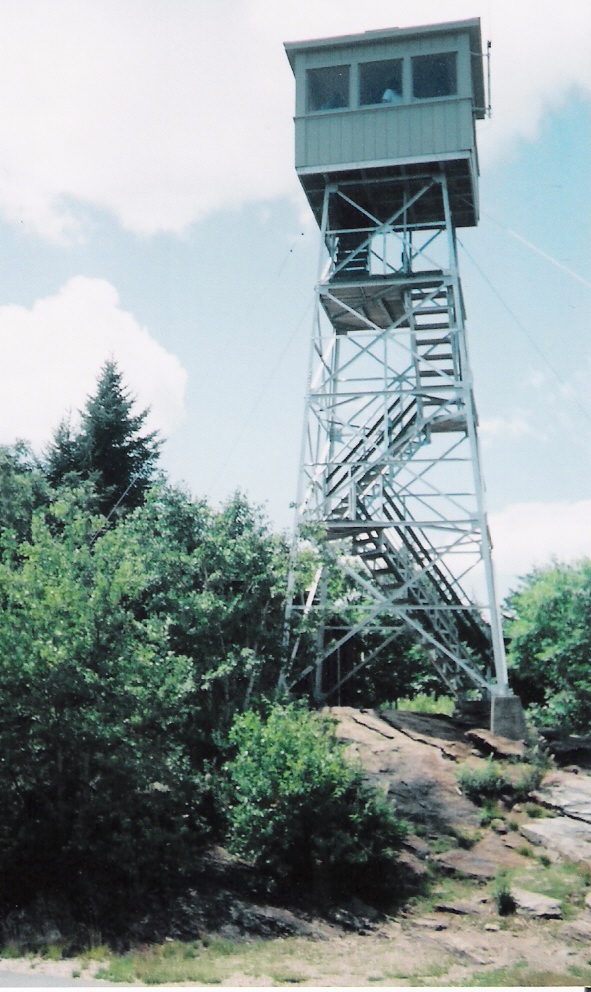
Pack Monadnock is the most popular part of the trail, with Miller State Park and the summit’s fire tower apt to draw crowds. North Pack is close enough to add for an out-and-back hike.
I like the Temple Mountain ridge in July, when I can make a lunch out of blueberries. Watatic, at the southern end of the trail, has a wonderful open summit. The variety of birds in the Binney Pond area make the mosquitoes worth tolerating.
Endurance racers have been known to run the entire trail in a day. I take the Wapack in segments, at a gentle pace. Either way, the Wapack Range is memorable.
North Pack Monadnock – Pack Monadnock
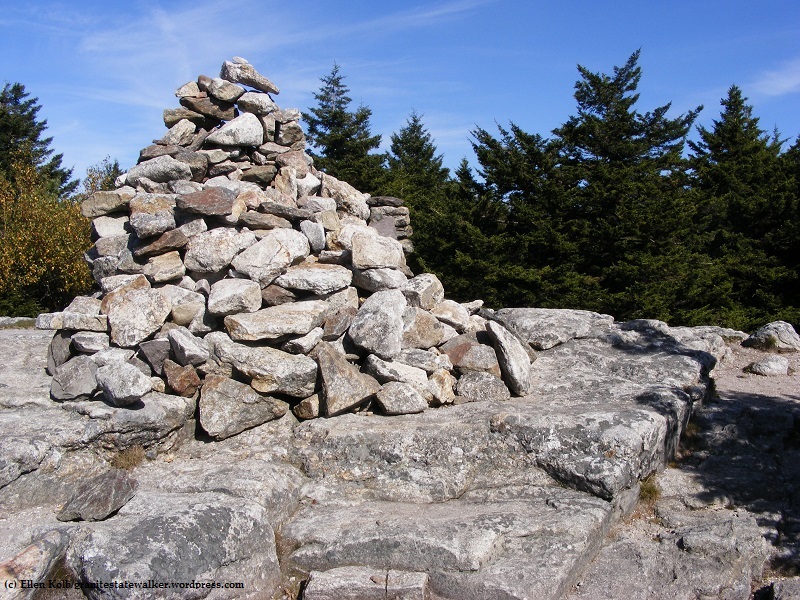
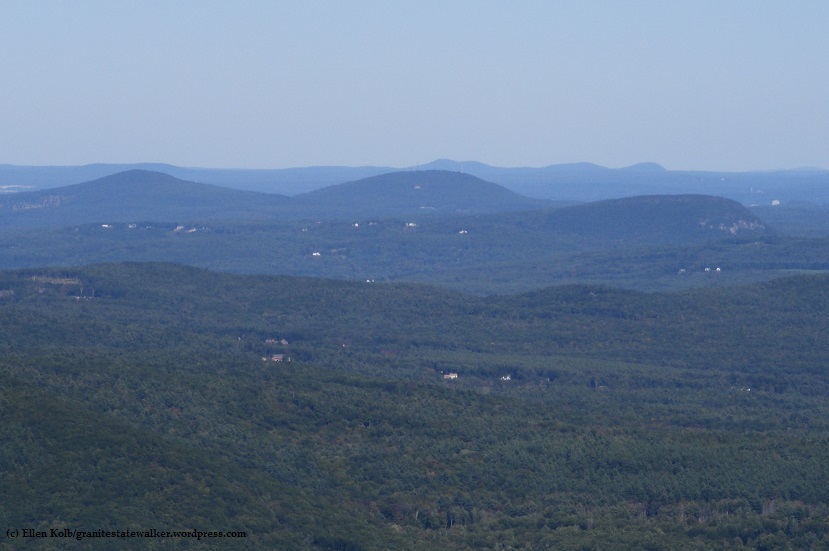
Northern trailhead, Greenfield NHmileage from northern terminusNorth Pack Monadnock summit cairneast from North Pack: the Uncanoonucs and Joe English HillEvery fall, New Hampshire Audubon volunteers staff a raptor migration observatory on Pack Monadnockfire tower at summit of Pack Monadnock
Mt. Monadnock seen from Temple Mountainparking area on Temple Road in Temple, leading to Sharon Ledges on Temple Mtn.view to south from Myrick Overlook on Temple Mountain: Wapack RangeThe Wapack’s yellow blazes guide snowshoers along the trail.Winter view from the Wapack Trail.
Southern section of the trail
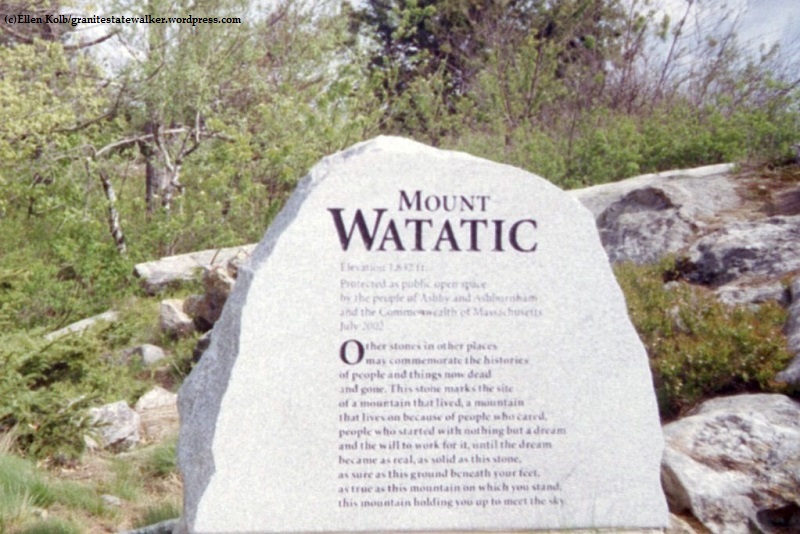
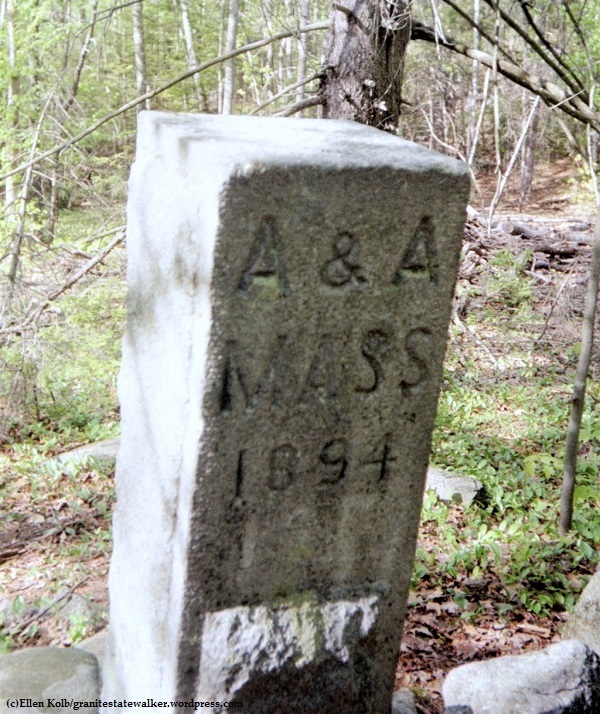
Binney Pond, a fine birding area along the Wapack Trail in New Ipswich, NHThis monument sits atop Mt. Watatic in Ashburnham, MassachusettsThe NH/MA state line.A state line monument. A&A means Ashby and Ashburnham MA. The other side of the monument has “NI” for New Ipswich NH.
I joined 17 people and one tiny-but-mighty dog for a leisurely three-mile amble through a portion of the Forest Society’s Heald Tract in Wilton, New Hampshire.
Castor Pond, where we enjoyed lunch on our hike. It’s home to heron and other water birds, as well as beaver and otter.
Our guide was David, a volunteer for the Harris Center for Conservation Education. Two of my fellow hikers owned property near the tract and knew a lot about the history of the area. We had good company and good conversation for the three hours we spent together.
We walked through an area with old wells and foundations, and heard tales of the people who had built them and settled the area. We saw the most imposing beaver dam I’ve ever laid eyes on. I heard kingfisher as we sat pondside enjoying our lunch. No one was in a hurry, the company was congenial, and the weather was fine. I left determined to keep an eye on the Forest Society and Harris Center calendars in the future for other walks like this one.
This barn foundation dating back to the nineteenth century is about six feet high. The rest of the structure was lost to fire long ago.
For more about the Heald Tract including a map of the trails, go to forestsociety.org. Learn more about the Harris Center at harriscenter.org.
This little terrier is an unlikely-looking hiker, but she proved to be an intrepid and friendly companion.The opening to this old well is about five and a half feet across – easily the largest I’ve seen.
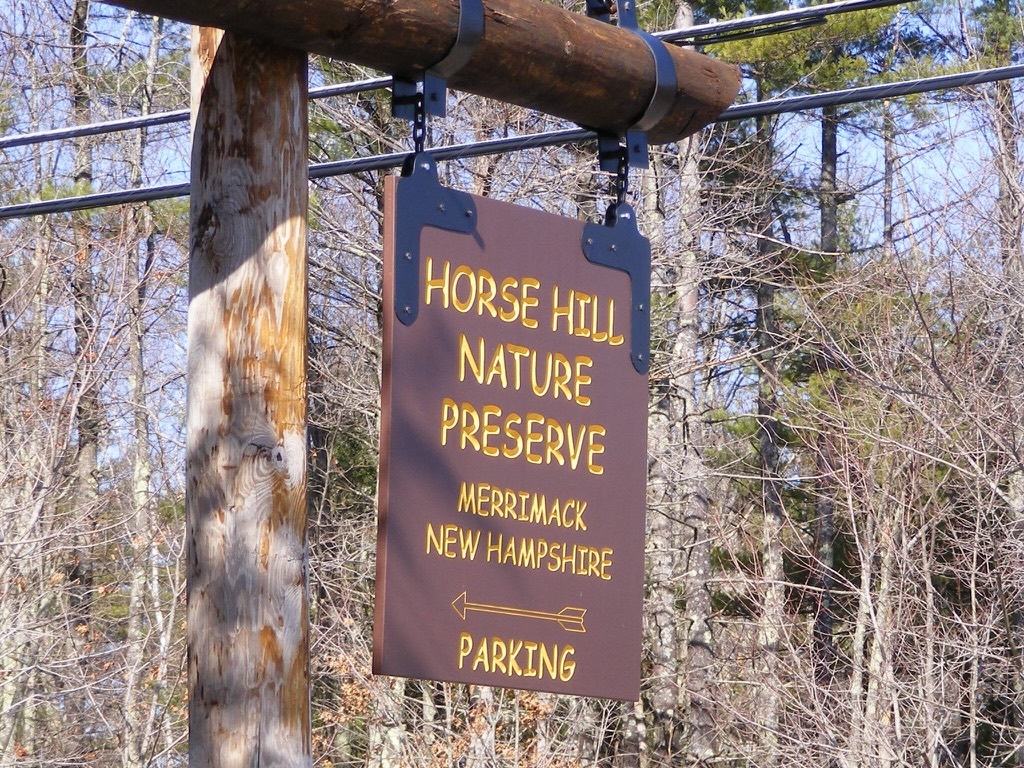
Among the places to which I’ve returned repeatedly since beginning this blog is Horse Hill Nature Preserve, one of my favorite southern New Hampshire destinations. Here are a few Horse Hill images.
When I moved to this area thirty years ago, what is now the preserve was just a big undeveloped area with a sandpit in the middle. There was once talk of building a housing development in there. The development never materialized, and in 2002, the town purchased the property for conservation. As a community, we made a wise decision.
The area needed a lot of cleanup before it was ready for prime time, and we resorted to some creative maneuvers to get the job done. I remember going there with my son’s Scout troop on a hike. In the sandpit area was debris from the area’s days as an informal target range. Each Scout gleefully stuffed his pockets full of shell casings and carried them out. I can only imagine how many forgotten little brass pieces found their way into washing machines that weekend.
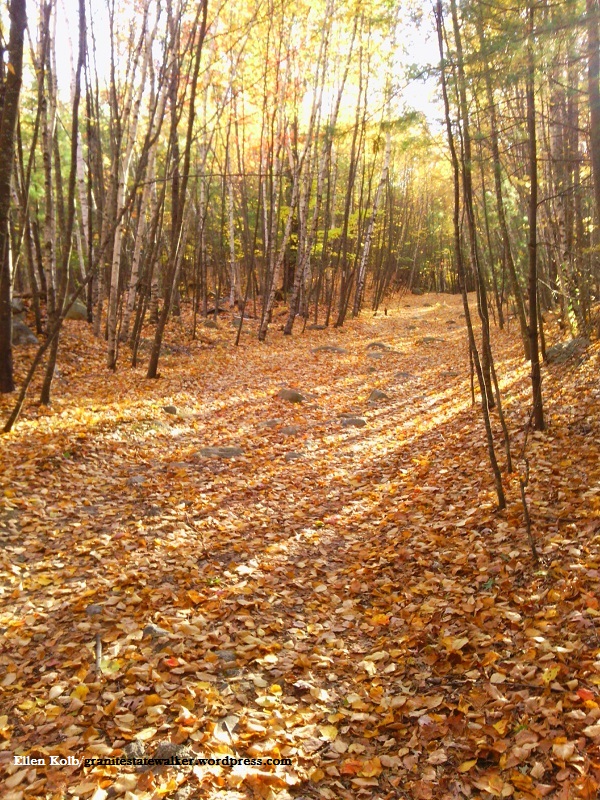
My favorite season at Horse Hill. Photos by Ellen Kolb.
Now, Horse Hill is a year-round spot for walkers, runners, and off-road bicyclists. Horseback riding is allowed, too, for equestrians who don’t mind taking their chances sharing a trail with bikes. As for being a nature preserve, Horse Hill’s wetlands and trees provide habitat for a variety of wildlife.
Horse Hill is popular enough that the town just tripled the size of the parking area, yet it never seems crowded once I’m more than five minutes from my car. Plenty of trails branch off from the main loop, so hikers aren’t concentrated in one area.
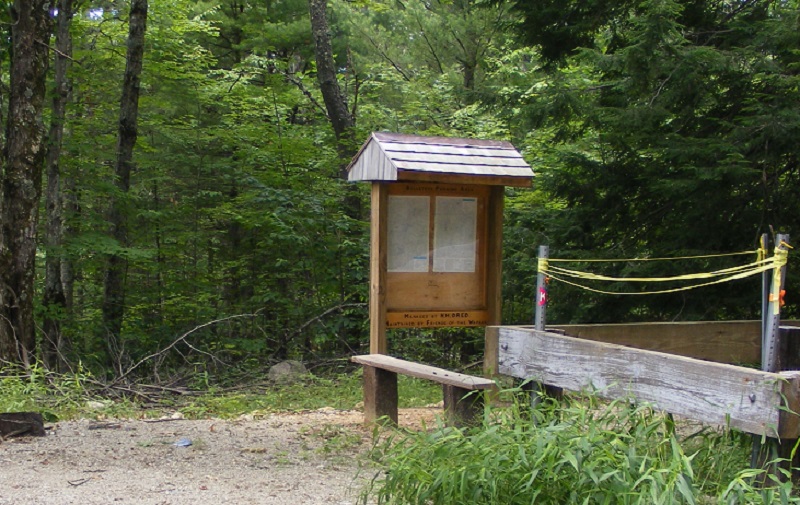
If you go, pick up a map first from the kiosk on Amherst Road, and then have fun.
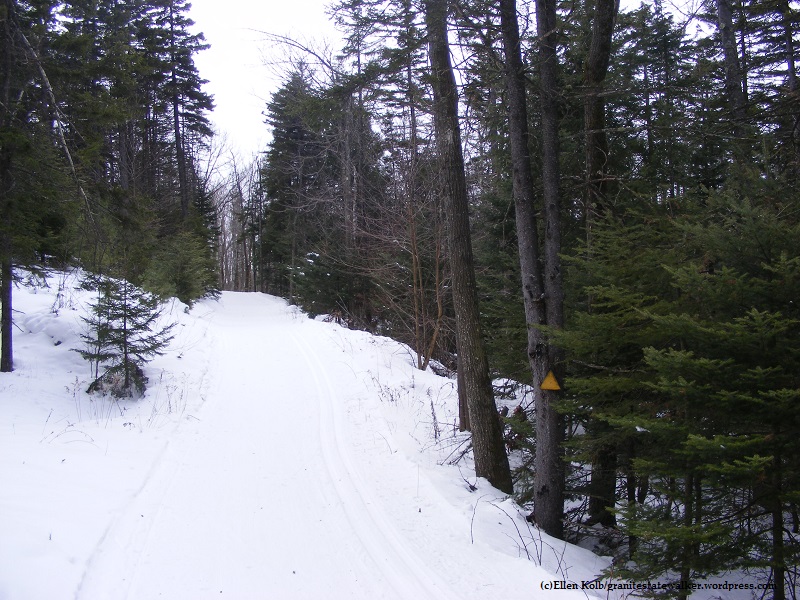
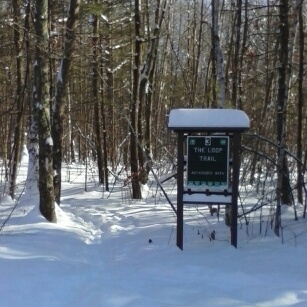
Trails in winter are good for snowshoeing, cross-country skiing, and fat tire biking.
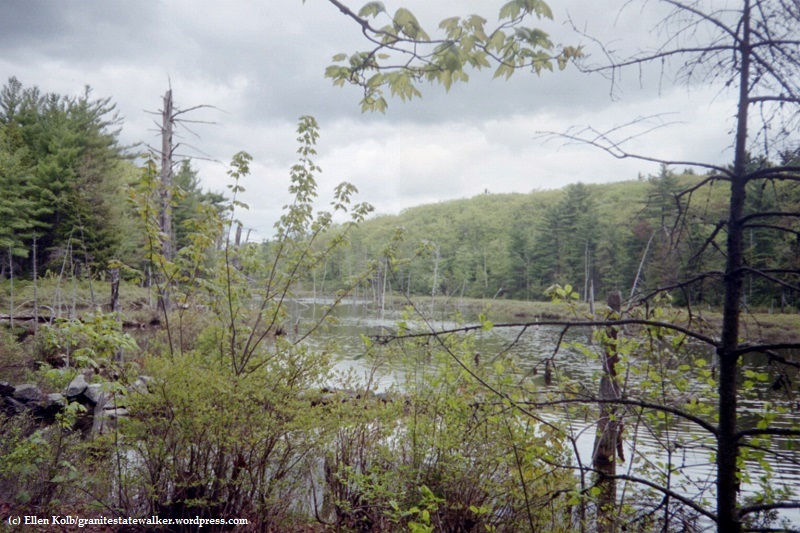
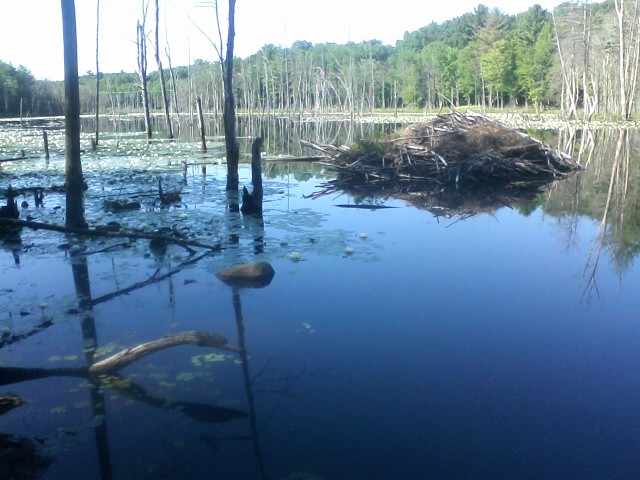
Lastowka Pond at Horse Hill Nature Preserve hosts a heron rookery and beaver lodge.








 Granite State Walker