“Open eyes and sturdy shoes”

“Today, you hike… I go because I want to and also because I can. I go because life doesn’t end once you’ve done enough. It keeps unfolding. And I intend to meet it with open eyes and sturdy shoes.”

That’s from the Blissful Hiker podcast by Alison Young. After my recent journeys recounted on this blog, her message resonates with me. I heartily recommend this nine-minute episode called “Aliveness”, for inspiration and encouragement.

Open eyes and sturdy shoes: I’ve been working on that here at Granite State Walker for nearly two decades now. It’s always good to meet fellow hikers similarly equipped. Walk on!

From blissful hiker ❤︎ inspiring you to hike your own hike: Aliveness, Jul 3, 2025
https://podcasts.apple.com/us/podcast/blissful-hiker-inspiring-you-to-hike-your-own-hike/id1515744759?i=1000715549476&r=269
This material may be protected by copyright.

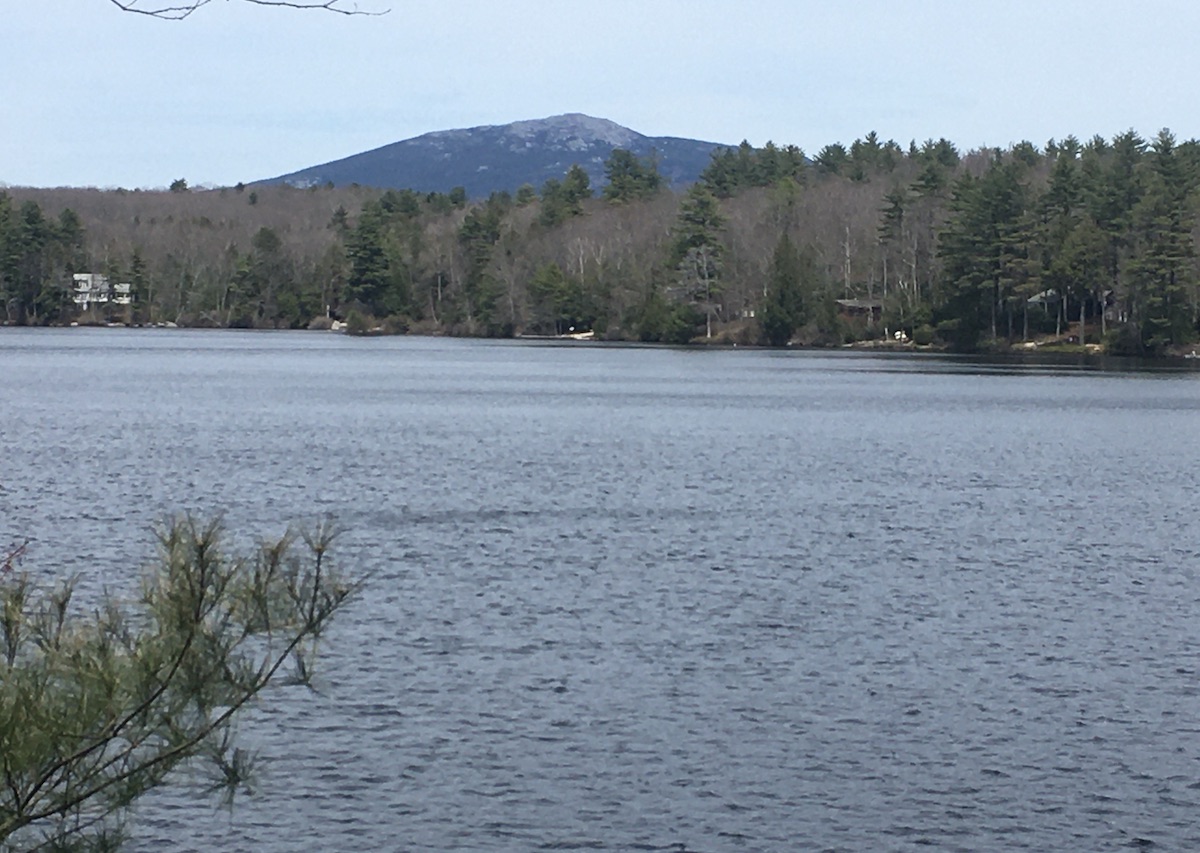
Header photo by Ellen Kolb. Mount Kearsarge (south), NH.

How to become a Granite State walker

Some time ago, a local writer interviewed me about the advantages of getting outside to walk on trails and paths and sidewalks. The resulting article sparked questions from readers about how I got started doing just that. So here’s how I became a Granite State walker, and I can hope this helps inspire soon-to-be-walkers everywhere.

Legs and feet of hiker who is reclining in a meadow with yellow flowers
Image by Kurt Bouda from Pixabay

Getting started

I’m writing with my age-60-plus contemporaries in mind, but anyone can take the information and make the most of it.

For someone who hasn’t yet developed a habit of walking or hiking, what’s the first step? I’m supposed to say “get the OK from your health care provider.” I confess that I didn’t do that when I got started.

Next thing to do is get good shoes. Nothing will ruin a good day faster than a blister or pinched toe or plantar fasciitis (the bane of my existence). Think of good shoes as a prescription: high priority, worth the price, essential to health. I’m a thrift-store shopper for the most part, but when it comes to footwear for hiking, I head straight for the local specialty shoe store with a staff accustomed to working with active adults. For me, that means Alec’s in Nashua NH. Even the discount racks there have high-quality shoes. They’re only on the discount rack because they’re last year’s models – and who cares about the model year? As for cost, good shoes are cheaper than medical care necessitated by poorly-fitting shoes or a sedentary lifestyle.

If you’re exploring trails in New Hampshire, get a Hike Safe card online from New Hampshire Fish & Game, and read the Hike Safe website. Even if you’re not a Granite Stater, that site has good information for you.

I keep a rain jacket and ice-gripping cleats handy, but sometimes a treadmill is a better option for me when the weather’s messy. I maintain a $10-per-month gym membership to keep that option open.

If your mobility is impaired for any reason, even temporarily, work with your health care provider for strategies that will help you explore the outdoors.

Where to walk

The hardest part of developing a habit of walking is simply deciding to get out there. Walk around the block or through the neighborhood. Ten minutes on pavement is better than ten minutes of looking the nearest screen. Once I got started walking for pleasure and exercise, ten minutes grew to 20, then an hour, and so on.

If you rely on assistive devices for mobility, look for trails that are paved (like the Windham and Londonderry trails) or are otherwise well-surfaced. Friends might know about accessible places. Check with your local senior center; I’ll bet there are volunteers with ideas. Online research can help.

If you’re lucky enough to live in a low-traffic area, create some routes on local streets. Look up your town’s Parks and Rec department and Conservation Commission. Both are likely to have properties with trails and trail maps. Check out state parks, too.

The Fire Tower Quest sponsored by New Hampshire Forests and Lands led me to towers near and far, from Federal Hill in Milford to Mt. Magalloway in Pittsburg. Want a Tower Quest patch? Visit five towers, and in southern New Hampshire, that’s not too hard. Bring a friend or a child or a grandchild. The views are worth the uphill walks.

The Forest Society has properties all over New Hampshire, many with marked trails. Find out about properties and download maps at https://www.forestsociety.org/visitor-guide. A few of my favorites are Dame Forest in Durham, Madame Sherri Forest in Chesterfield, and the Merrimack River Conservation and Education area in Concord.

Anyone who’s read this blog for awhile knows that I’m a rail trail fan in all seasons. Do yourself a favor and browse the New Hampshire Rail Trails Coalition website, nhrtc.org.

What’s the difference between a hike and a walk? Very subjective. To me, if I need boots, that’s a hike. Don’t let yourself think you’re not a hiker just because you’re not on the way to the summit of Mt. Washington.

Safety

When I head outside, whether I’m in the neighborhood or away seeking one of those fire towers, I let a family member know where I’m going and when I expect to be home.

I say this as someone who much prefers hiking alone: it’s a good idea to hike with a partner. I know that when I choose a solo trip, I’m deciding not to have someone around who can summon help if I’m injured and unable to fend for myself.

Go to hikesafe.com for information on what to carry on a hike. Be responsible for your own safety to the greatest extent. New Hampshire Fish and Game offers a list of the Ten Essentials. Even on a local walk, I’m sure to have my phone, keys, a whistle, a small flashlight that hangs on my keychain, and ID. If I’m on a trail, I have a printed map.

I always bring my phone, and I never stake my life on it. Yes, my smartphone has a compass and can store maps, but only if the battery is charged – and here’s the voice of experience to assure you that batteries run down. Some of the places I go, even in my own town, have weak or no cell signal. Calls might be impossible and texts might be sketchy. As for the phone’s flashlight, using it will burn through the phone’s battery in no time.

Why bother?

Why choose to create a walking habit in the first place? I started out for my own mental health. As I pace I can pray, mull over a problem, or learn from what I see around me. As a young mother of five, I found the walks refreshing. They didn’t do the kids any harm, either.

Physical health was a secondary concern for me when I got started, but it has become more significant as I’ve grown older. “Movement is medicine,” says my massage therapist. My experience bears that out. I have a genetic predisposition to some annoying things that have been kept at bay by regular physical activity. Joints have stiffened; they’d be stiffer still if I weren’t literally putting them through their paces frequently.

Walking teaches me to appreciate where I am, without comparisons. I am no Olympic athlete. My aerobic capacity is not comparable to that of a distance runner. I will never set a speed record beyond the ever-challenging Personal Best. And you know what? I’m a walker anyway. I’m a hiker anyway. I’m not trying to impress anyone, and I’m grateful for every step. Gratitude gets easier with age.

Walking has taught me to see what’s around me. The pace suits me. I see things that a runner or cyclist or motorist would miss. Along the way I’ve grown to appreciate the work of trail stewards. I’ll never again take for granted a path that’s in good shape.

I was in my mid-thirties when I started walking for exercise. Most of those walks were once around the block (did I mention I have five children?). Now, thirty years later, I just wrapped up a trip that included 66 miles of walking. Your style and goals might be different, and that’s fine. Just start.


If you’d like to support Granite State Walker, you can buy me a coffee. Thanks!

NHRTC conference welcomes you

What do I do when I’m not hiking? Lots of writing, much of it on topics having nothing to do with the outdoors. Sometimes, though, I take what used to be called a busman’s holiday: I seek events where I can learn more about trails and the people who treasure them. I never run out of things to learn.

One such opportunity is coming up at the end of October. It’s the biennial conference of the New Hampshire Rail Trail Coalition, to be held on Friday, October 27, 2023, at the McAuliffe-Shepard Center in Concord, from 8:30 a.m. to 4 p.m. The theme is “Collaboration, Communication and Connections.”

It’s for anyone who’s interested in our state’s rail trail system, and it has something to offer to anyone who cares about outdoor recreation. Twenty-five dollars will get you a day filled with interesting people, useful information, AND breakfast and lunch. That’s a bargain, my friends.

Ever heard of Cycling Without Age? That’s a program being implemented on a portion of the Northern Rail Trail, where a cycling “pilot” can give rides to people who due to age or disability would otherwise not have access to the trail. Where does funding come from for trail development and maintenance in New Hampshire? You might be surprised at the sources. How many local trail groups are working within New Hampshire? More than you think, and many of them will have trail-specific information to share at the conference. These topics and more will be on the day’s agenda.

I’ll be there as a NHRTC board member, helping to check in attendees. I’d love to welcome you personally. Find out more at nhrtc.org, and if you’re ready to register, click on https://bit.ly/3KLqjHn.

flyer advertising New Hampshire Rail Trail Coalition conference 2023

Manchester program invites exploration

It’s been a fine spring here in southern New Hampshire, even with the usual allergies kicked up by all the pollen in the air. I’ve been visiting familiar trails, a couple of new ones, and one that I haven’t visited in a long time. I’ll post some photos and comments in due course. But in last weekend’s Sunday News, I came across something I want to share right away. It just might be something that lets a city-bound Manchester reader discover new places.

Check out Transit to Trails, a project of Manchester Transit in cooperation with the Nature Conservancy and several other organizations. On the first Saturday of each month from June to October, buses will run between 775 Elm Street in Manchester (Veteran’s Park) and an outdoor destination within a half-hour’s ride away. The program is free to riders, and it even includes admission to the state parks that are part of the program. This is a first-come-first-serve program. Find details at https://www.nature.org/en-us/about-us/where-we-work/united-states/new-hampshire/stories-in-new-hampshire/transit-to-trails/.

On June 3 and October 7, the destination will be Pawtuckaway State Park, with its fire tower, lake, and miles of trails. July 1 will be dedicated to Manchester parks and a farmer’s market. The August 5 trip will be to Bear Brook State Park, which like Pawtuckaway offers a variety of activities and plenty of trails. On September 2, the destination will be the New Hampshire Audubon Massabesic Center on the south side of Lake Massabesic.

I don’t know of any other way to find car-free and cost-free access to Pawtuckaway, Bear Brook, and the Massabesic Center. This sounds like an amazing program for Manchester residents.

glacial erratic boulder in Pawtuckaway State Park, New Hampshire
Glacial erratics are found throughout Pawtuckaway State Park. Backpack placed at base for scale. Ellen Kolb photo.

The well-read hiker

As I write this, a brief but vicious cold snap is dominating the local weather. It’s an evening for reading amid quilts and hot drinks. I want to share a couple of gems that fellow walkers might enjoy.

If you’re not following the one-of-a-kind blog New Hampshire Garden Solutions, click over to it this minute (yes, this one). The photography alone will make your day, but the writing certainly holds its own. Don’t let the blog’s title fool you; I think the site might have grown away from its author’s original intent, as blogs are wont to do. These posts are the record of the ramblings of a southwestern New Hampshire hiker armed with a macro-lens camera, a keen eye for detail, and a love for botany. In almost every post, I learn the name of one or another plant I’ve seen but never been able to identify. On a day like this, when I’ve let the weather get the better of me, New Hampshire Garden Solutions helps me look forward to future Granite State hikes.

One of my goals for 2023 is to walk the full distance of the Ashuelot Rail Trail, which is right smack in the middle of that blog’s territory. I’ll probably use the blog to create a list of things to look out for along the way.

I sometimes think (wrongly) that I’ve read every book published in English about walking, trekking, and hiking. For walking – just plain walking – it’s tough to find anything fresh that’s longer than a magazine article. A casual visit to my local library’s New Books shelf turned up a pleasant surprise: 52 Ways to Walk by Annabel Streets. As the number in the title suggests, there’s an idea or recommendation for each week in the year. The subtitle is “the surprising science of walking for wellness and joy, one week at a time.” Ms. Streets does not believe in being held back by weather, even the kind that has me hunkered down at the moment with a mug of hot chocolate. I’m only a few “weeks” into the book, but I can already tell that I just might get carried away by the author’s enthusiasm….once the outside temp moves above zero once again.

Enjoy the reading, and stay safe as winter serves up its worst. The trails will still be there for us later.

Hike Safe card: not just for mountain hikers

For my New Hampshire readers, here’s a plea from me: if you haven’t purchased a Hike Safe card for 2023, please do so now. Even if you’re sure you’ll never need to be rescued, buy one anyway. It will be a small way of supporting the state’s Search and Rescue fund. Sadly, demands on the fund never let up.

TL;DR: Take out a credit card, go online to the New Hampshire Fish and Game’s Hike Safe page, and plunk down $25 for a virtual card covering an individual, $35 for a family. If a Hike Safe cardholder needs to be rescued in the course of an outdoor activity, she or he will not in most cases be assessed for the cost of the rescue. Just get the card. Don’t wait.


I write this as I hear news about a hiker who perished upstate while attempting a solo hike on a mountain ridge in winter weather. A few weeks ago, another hiker lost her life in the same area. Rescue attempts, which became recovery missions, involved professional conservation officers from New Hampshire Fish and Game plus many volunteers.

Those same volunteers and first responders would come out even if the trail were less challenging. They don’t write off any of us. Missing hikers, once reported overdue by family or friends, spark a search-and-rescue mission.

I know from experience that hikes can go awry even in good weather on heavily-traveled trails. (A particularly embarrassing day on Monadnock comes to mind.) While I haven’t yet inspired any rescue missions, I’m uncomfortably aware that this could change anytime. I carry simple essentials even for short hikes, but even so, bad stuff happens now and then.

Ninety percent of my trail miles are on flat trails within an hour of my home. I buy a Hike Safe card every year anyway. It’s cheap insurance against being assessed some hefty costs arising from my own negligence. More importantly, the card lets me as a hiker contribute to the readiness of search-and-rescue teams.

Hunters, anglers, and anyone registering a boat, OHRV, or snowmobile already contribute to the Search and Rescue fund as part of their license and registration fees. Hikers don’t need a license. We can pull our weight, so to speak, by purchasing the Hike Safe card.