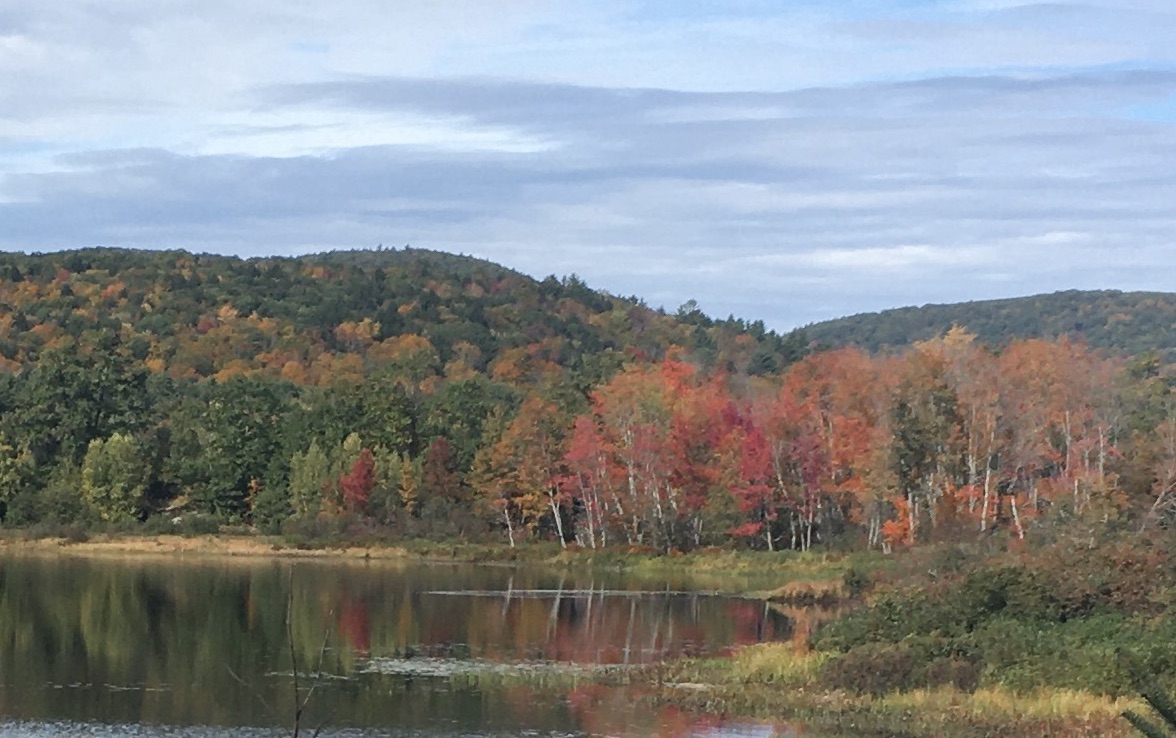
Follow the leaders: McCabe Forest, Antrim NH

I like walking and hiking solo. Peace, quiet, my own pace. But sometimes a guided hike is a good thing. I have a lot to learn about the things I see. One way I try to expand my horizons is by participating in some of the guided hikes offered by the Society for the Protection of New Hampshire Forests, better known as the Forest Society. I recently joined one at the Society’s McCabe Forest in Antrim. (Parking for the property is on the east side of U.S. 202, about a mile north from the center of Antrim.)

The last time I was at McCabe Forest, it was summertime, and the insects were out in force. Now, it’s autumn, the golden time, pre-ice and post-bugs. Forest trails are in style.

The Contoocook River edges the property. The river is lazy and low this time of year, but there’s evidence of how high it can get in periods of heavy rain. I thought about how often I’ve seen the Contoocook during my travels: I’ve hiked along the rail trail in Rindge and Jaffrey that follows the river from its source. I’ve walked the Peterborough Common Path in wintertime with the river beside me. I’ve seen it as I’ve explored Mast State Forest in Concord, just a few miles from where the river flows into the Merrimack.
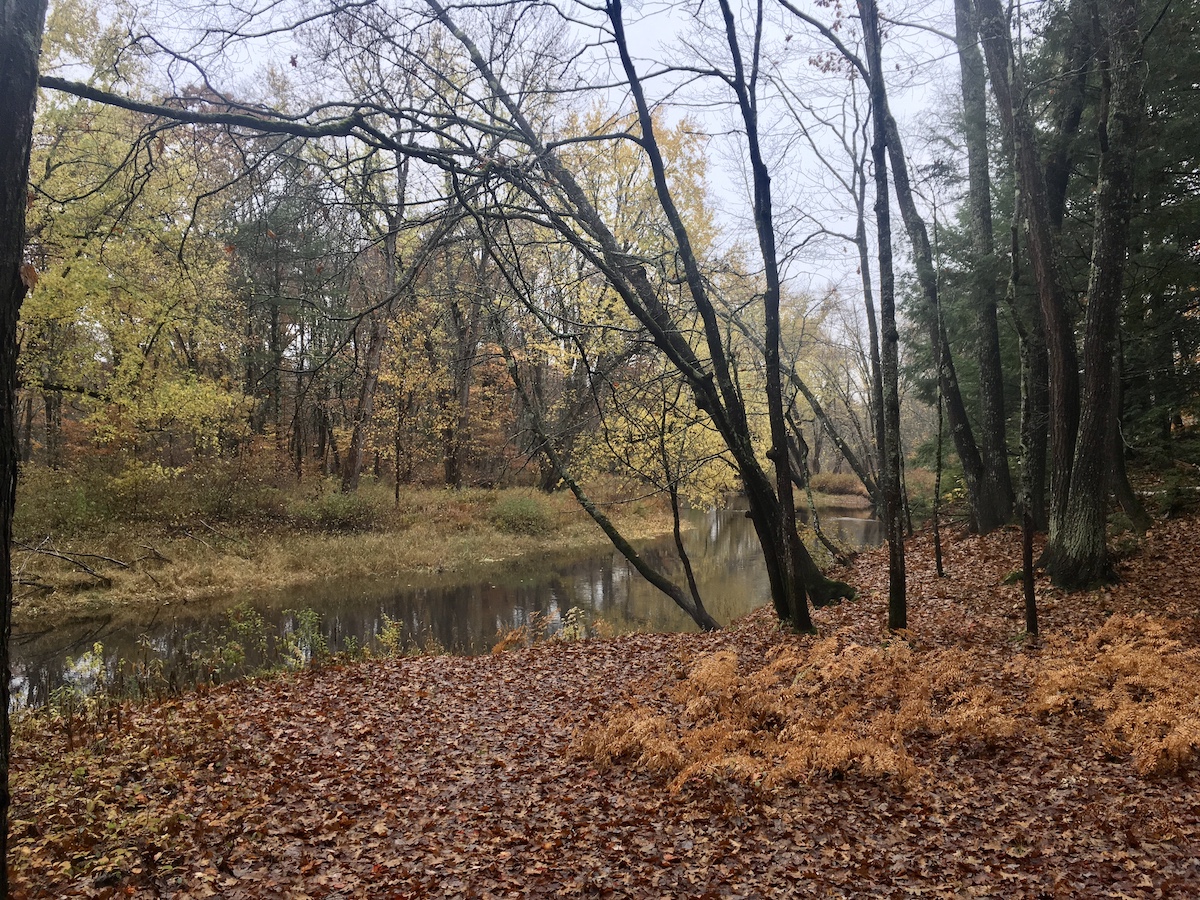
River and forest, autumn, New Hampshire
Contoocook River, Antrim NH. Photos by Ellen Kolb.

I long ago abandoned the silly notion that if you’ve seen one forest trail, you’ve seen them all. Even a single trail can fascinate me with its changes from one season to the next. Accompanying someone familiar with a property can help me sharpen my powers of observation. How could I walk right by a mahogany-colored mushroom of majestic dimensions? I would have, without a guide. It would have been just a random thing blending in with the fallen leaves.

Fungi on the forest floor, dwarfing the leaves

People living in a house at one edge of the property enjoy a view that many of us might envy, with no sign of where the backyard ends and the Forest Society land begins. The “border,” such as it is, is figuratively afire with a very attractive shrub that is unfortunately an invasive nuisance. Burning bush is an apt name for it, with leaves whose color stands out from everything around them. Originally imported as an ornamental, burning bush has escaped garden plots all over the state and now crowds out native plants. In fact, it’s now a prohibited species in New Hampshire, so don’t try to buy it. In my own town, it’s one of several hard-to-control invasives on our Conservation Commission properties.

Burning bush, a invasive ornamental plant
Burning bush, attractive but invasive

These Forest Society hikes feature informal lessons on natural history, geology, and the people who have lived in the area. (If you’re ever on a Society hike with Dave Anderson, settle in for some good storytelling.) Also, it’s fun to meet people who share an interest in New Hampshire’s natural beauty. Keep the Forest Society in mind if you’re looking for guided-hike ideas. You’re bound to come across something interesting.

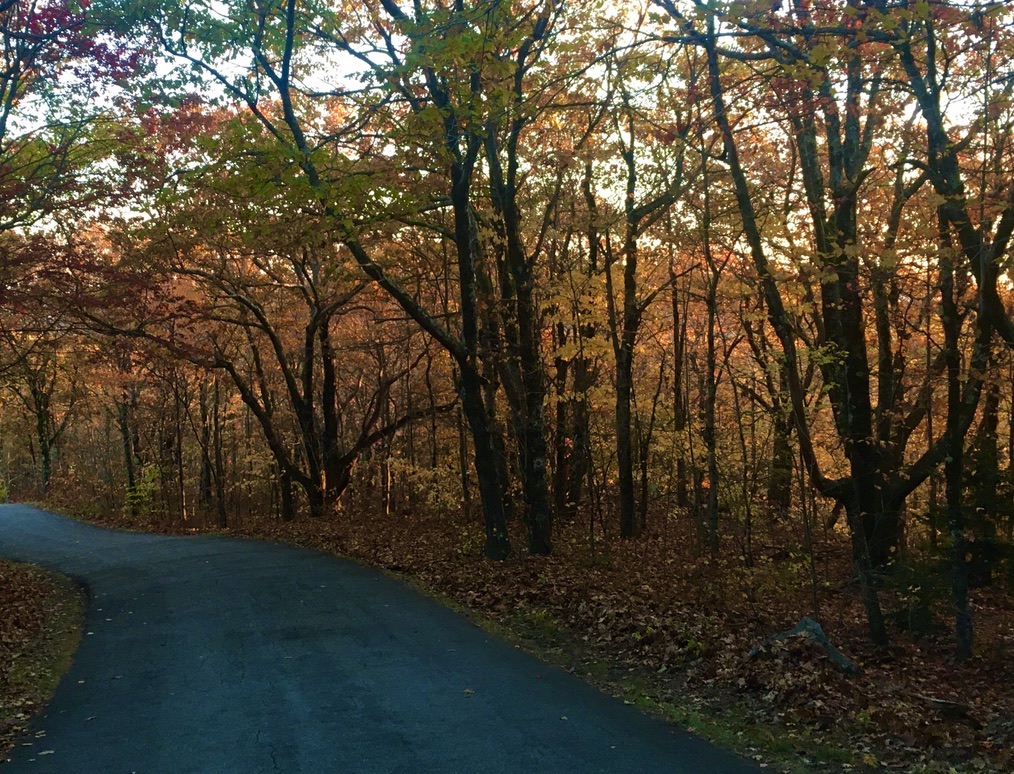
Autumn afternoon on Pack Monadnock

As a pedestrian, I like to take advantage of the auto road up Pack Monadnock in New Hampshire’s Miller State Park during off-hours, when the gate is closed to auto traffic. Sometimes I’d just rather reach the summit on smooth pavement instead of using the trails in the woods. I recently made the trip as late afternoon was shading into evening.

Miller State Park auto road (Pack Monadnock), late October. Photos by Ellen Kolb.

The road’s uphill grade gave me a bit of a workout, even at my easy pace. I’m discovering that a pair of trekking poles can be helpful to me no matter how smooth the terrain. My poles and I made it to the picnic area at the summit about 35 minutes after leaving the parking lot, covering a bit under a mile and a half of road with 700 feet of elevation gain.

Mount Monadnock seen from Pack Monadnock

Gold and bronze leaves caught the setting sun and made the woods glow.

The Boston skyline was lost in haze, except for one of the Back Bay skyscrapers situated at just the right angle to reflect the sun’s rays. It was probably the glassy Hancock building, which I know has a different name now – but it will always be the Hancock building to me.

Mount Monadnock – the Grand Monadnock – is only a few miles away. The view of it from the picnic area at the summit of Pack Monadnock is almost clichéd; everyone takes a photo from the same spot. I’m no exception. The colors of the sky vary with the season and the time of day. Sometimes the view is hazy and sometimes it’s crystal clear. However many pictures I’ve taken there, no two are identical.

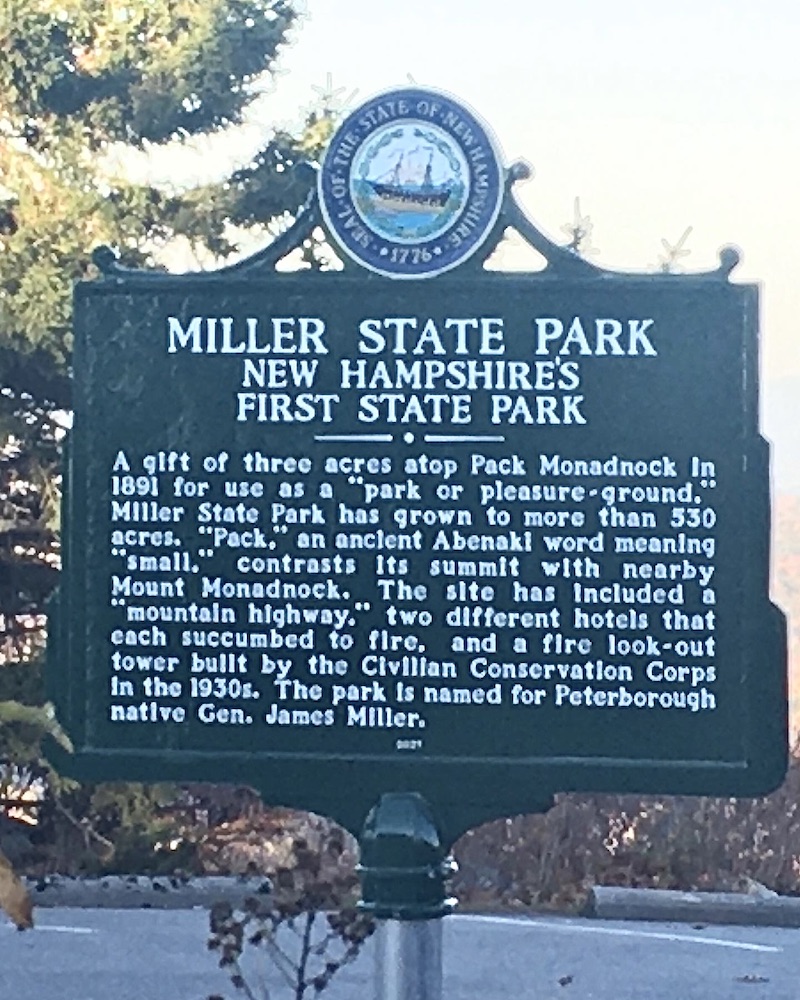
New Hampshire historical marker number 270, Miller State Park, Pack Monadnock summit

I love finding historical markers on my walks, and there’s a new one atop Pack Monadnock in honor of Miller State Park. Almost all of the New Hampshire markers are placed along state highways, but this one rated a special spot. Route 101 gets you to the park, but you’ll have to drive or hike to the summit to see the marker.

I got to the park too late in the day to join the autumn raptor migration count that takes place on Pack Monadnock daily, sponsored by New Hampshire Audubon and the Harris Center in Hancock. It’s a fascinating event that’s definitely worth checking out if you’re in the area this time of year. Bring the kids!

The park’s $4 admission fee is a bargain. I put my donation in an envelope and dropped it in the iron ranger, which is a donation box visitors can use when there’s no attendant on duty. For visits during the park’s regular hours, I advise checking the New Hampshire State Parks website first; reservations might be advisable on busy days. The park entrance to the auto road is located on NH Route 101 in Peterborough.

Several of the state parks have auto roads to featured vistas, and they each make for a pleasant drive. My favorite way to enjoy those roads, though, is on foot in the early morning or late afternoon, when the gate is closed and there are no cars around. Autumn with its moderate weather is prime time for a visit.

Early fall, Northern Rail Trail

If the Danbury Country Store were a human being, it would be my new best friend. This and other treats awaited me as I set out on a long walk on central New Hampshire’s Northern Rail Trail.

Fifteen miles is a big stretch for me, especially after losing fitness and energy to post-Covid problems earlier this year. I had to crawl, figuratively, before I could walk far again. I’ve added a few more miles each week. This week, I decided to go big. I walked on the trail from Potter Place in Andover to the Danbury Country Store and back. I figured that was one way to evaluate how I’m doing.

I’m doing fine. Sore, yes, but fine.

Sights

I’d seen Potter Place before, but its charm catches me by surprise every time. The restored depot in Andover close to the US 4/NH 11 junction is a tribute to the people who care about the rail trail and the railroad’s history. The Northern Rail Trail is in fact well-loved and well-maintained throughout its fifty-plus miles. A big park-and-ride lot just down Depot Street from Potter Place is an ideal spot from which to launch a walk or ride along the trail.

 railway car and restored train depot
Potter Place: restored depot and an old Central Vermont Railway car. All photos by Ellen Kolb.

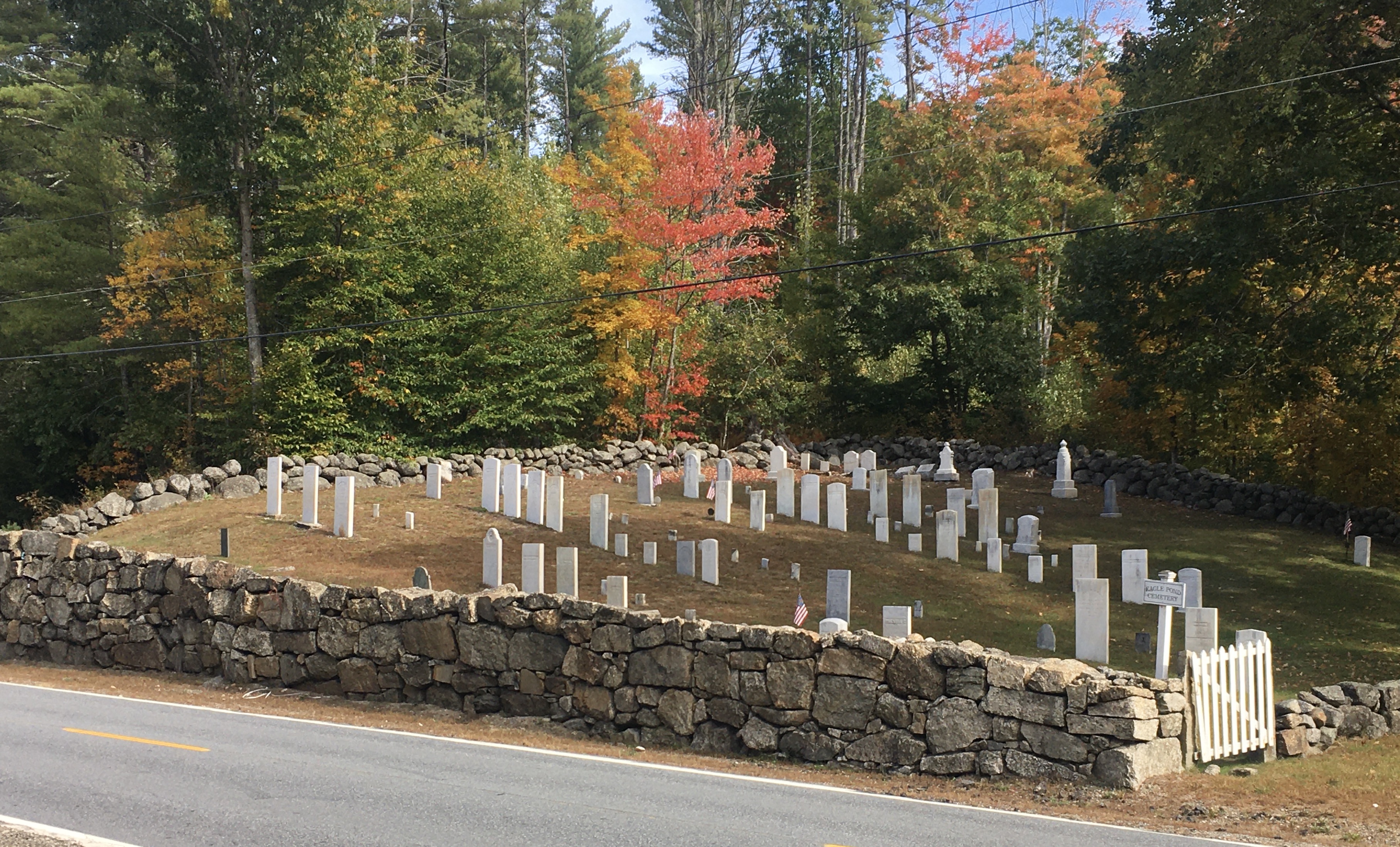
Coming upon an old cemetery is no surprise on any of my walks. In Wilmot, I came upon one that looks beautifully tended. From a distance the markers looks unweathered. They’re all upright. The stone wall around the cemetery is a work of art, albeit with some interesting items (read: “trash”) tucked between some of the stones.

small cemetery with upright stones, surrounded by stone wall with fall foliage in the background
Eagle Pond Cemetery, Wilmot

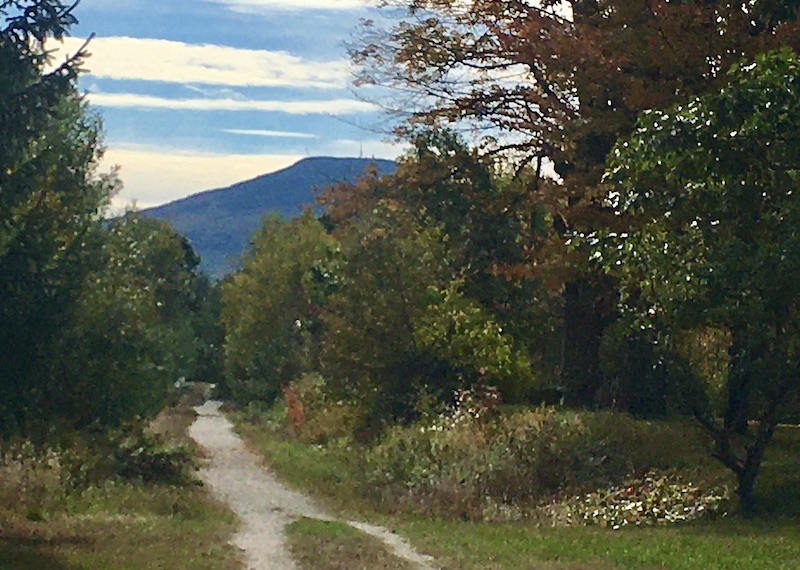
I even got a glimpse of Mt. Kearsarge. I took a photo that came out fuzzy, but even so one can barely discern the cell tower on the summit, with the fire tower just to its right.

unpaved trail through a forested area with a mountain in the distance
Mt. Kearsarge seen from Northern Rail Trail

Foliage

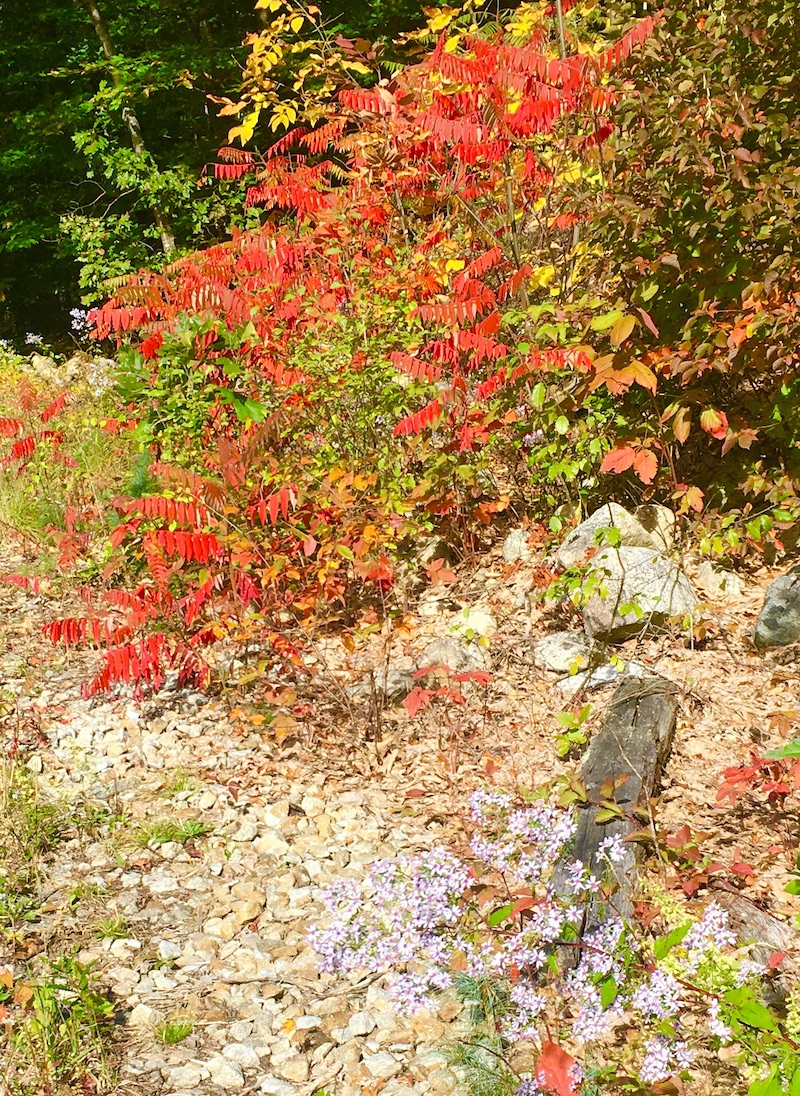
Fall is my favorite time to take walks, and even the weeks before peak foliage can be splendid. I found plenty of leaves underfoot this week. Remaining foliage in the central New Hampshire area I visited is still a week or two away from full color. Icy blue asters, a last reminder of summer, persist all along the trail, contrasting nicely with the changing leaves.

shrub in fall foliage
Tiny blue flowers in the foreground contrast nicely with the changing leaves.
pond surrounded by trees in autumn foliage
Eagle Pond in Wilmot

Lunchtime

My turnaround spot was the Danbury Country Store. It’s a must for anyone traveling along the NRT. I figured I’d sit on one of the porch seats there and nibble on a Clif bar from my pack. That was before the store’s deli crew set out two fresh hot pizzas. Game, set, match, and the Clif bar retreated to its pocket.

Also at the store: an air pump for cyclists, a huge assortment of beverages, the usual country-store inventory, and a deli where you can have any sandwich made to order. Enjoy. I sure did.

As I write this the day after my walk, I’m nursing a few aches, but they’re good aches. The kind that don’t herald injuries; the kind that whisper please don’t try this two days in a row. Best fifteen miles of the year, and that’s good to write three months after I needed my husband’s help to get around the block.

Fall isn’t winter’s knock on the door. Instead, winter is the price I pay for fall hiking. Fair exchange, in my view.